
Genteng bitumen: a practical overview for homeowners and renovators
A coastal homeowner replaces a rusting metal roof after a single storm season. A mountain cabin owner wants a quiet roof during heavy rain. A builder in a hot tropical city needs a lightweight covering that does not transfer the full force of the sun into the rooms below. Across these very different projects, one material keeps coming up in conversations: genteng bitumen. It is a roofing option that sits between traditional ceramic tiles and modern metal sheets, and it has earned attention because it is light, flexible, and surprisingly quiet under rain.
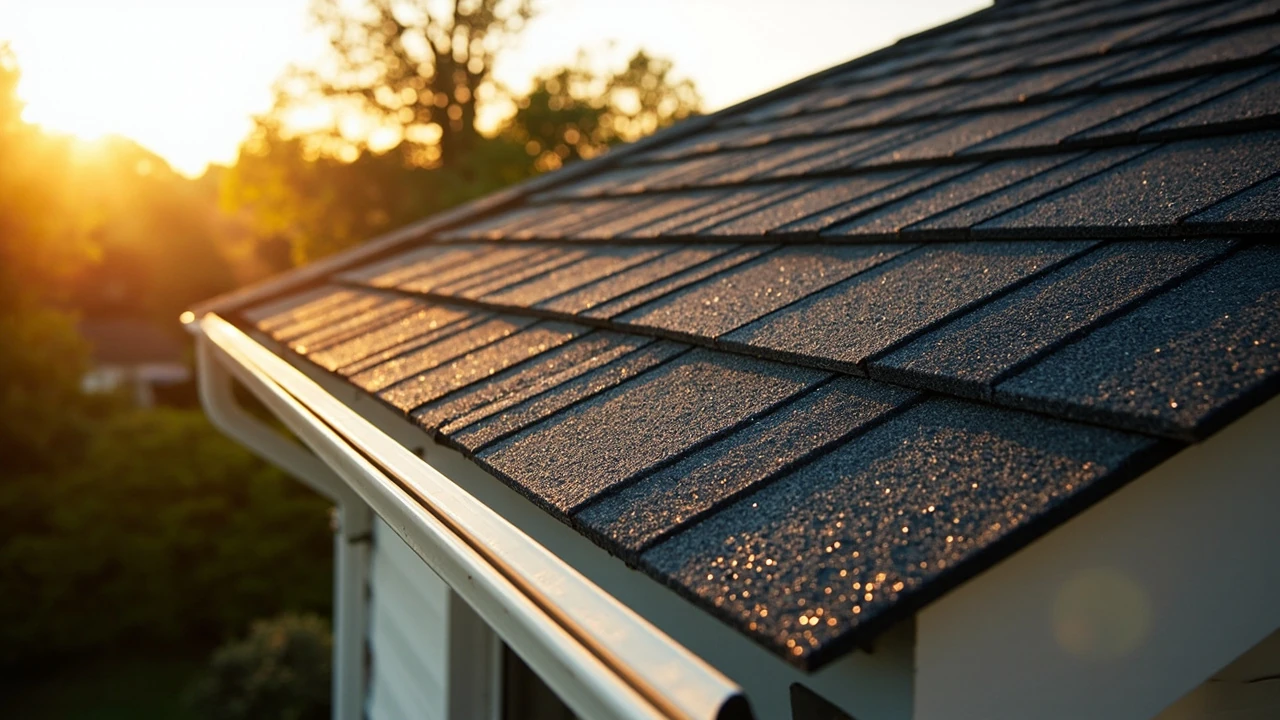
Genteng bitumen is not a single product but a family of asphalt-based roofing shingles. The core is usually fiberglass or organic felt, saturated and coated with bitumen, and surfaced with mineral granules. The result is a shingle that bends without cracking, weighs a fraction of clay or concrete tiles, and can be installed on slopes that would be awkward for rigid materials. This article walks through what genteng bitumen actually is, how it is built, where it makes sense, and where its limits show up, so that the choice is based on the building in front of you rather than on marketing language.
What genteng bitumen is made of
Every bitumen shingle is a layered product. The exact recipe varies by manufacturer, but the structure is consistent enough to understand at a useful level.
- Base mat. The skeleton of the shingle is either a fiberglass mat or an organic felt mat. Fiberglass is more common in modern products because it is dimensionally stable, does not absorb moisture, and resists warping. Organic felt mats use cellulose fibers and tend to be slightly heavier and more flexible.
- Bitumen coating. The mat is saturated with bitumen, a petroleum-based binder that makes the shingle waterproof. Oxidized bitumen gives stiffer, heavier shingles, while modified bitumen uses polymers such as APP (atactic polypropylene) or SBS (styrene-butadiene-styrene) to add flexibility and impact resistance.
- Mineral granules. The exposed surface is covered with crushed stone granules, usually ceramic-coated. Granules do three jobs: they protect the bitumen from ultraviolet light, they provide color, and they add a non-slip walking surface during installation.
- Adhesive strip. Most shingles include a factory-applied adhesive strip along the lower edge. Once the sun warms the roof after installation, this strip activates and bonds the courses together, helping the roof resist wind uplift.
- Self-sealing tabs and cutouts. The visible pattern of a shingle strip is created by cutouts that divide the strip into tabs. These cutouts are not just decorative; they help the shingle conform to the roof plane and shed water cleanly.
Understanding this layered construction matters because performance claims about genteng bitumen usually trace back to one of these layers. A granule loss problem is a granule problem, not a bitumen problem. A cracking issue in cold weather often points to the modified bitumen formulation rather than the mat. When a product is described in these terms, the claim is much easier to evaluate.
Why genteng bitumen behaves differently from clay, concrete, and metal
Most roofing decisions in residential construction come down to one of three traditional options: clay tiles, concrete tiles, or metal sheets. Genteng bitumen sits alongside them as a fourth path, and the differences are worth understanding before choosing.
Weight and structural demand
One of the most cited attributes of genteng bitumen is its low weight. A typical bitumen shingle roof weighs roughly 10 to 15 kilograms per square meter, depending on the product and overlap pattern. A clay tile roof can weigh 40 to 60 kilograms per square meter, and concrete tiles are often in the same range or higher. The practical effect is structural: a light steel truss or timber frame that comfortably supports bitumen shingles may need to be reinforced, redesigned, or built heavier to support tiles. In renovation work on older houses, this weight difference is often the deciding factor.
Slope range and shape flexibility
Bitumen shingles are flexible, so they can follow roof shapes that would crack rigid tiles. They are commonly used on slopes from roughly 15 degrees up to vertical surfaces, and many products are rated for slopes as low as 9.5 degrees when installed with additional underlay protection. Curved roof sections, dormers, turrets, and transitions between slopes are easier to handle with shingles than with rigid panels. Clay and concrete tiles work best on conventional slopes in a relatively narrow range, and metal sheets need careful detailing on very low slopes to avoid water ingress.
Sound under rain
Metal roofing can be loud in heavy rain unless additional insulation is built in. Clay and concrete tiles produce a duller sound, but they are still hard surfaces. Genteng bitumen, with its layered structure and granule surface, is noticeably quieter. The bitumen layer absorbs impact energy, and the granules scatter the sound. For homes near airports, busy roads, or regions with frequent heavy storms, this acoustic difference is often a primary reason for choosing shingles.
Heat transfer and thermal behavior
Bitumen is not a great insulator by itself, but the shingle assembly behaves as a thermal mass that slows heat transfer. The granule surface reflects part of the incoming solar radiation, and the bitumen layer stores and slowly releases heat instead of passing it straight into the ceiling. In tropical climates, this can translate to lower peak indoor temperatures in the late afternoon. In colder climates, the same thermal mass can hold heat inside the roof space for longer. Either way, the shingle does not behave like a bare metal sheet, which tends to radiate stored heat back into the living space at night.
Where genteng bitumen makes the most sense
Not every roof needs bitumen shingles, but several recurring situations fit the material well.
- Lightweight roof frames. Houses built with light steel trusses, timber frames, or modular structures often cannot carry the load of clay or concrete tiles without reinforcement. Bitumen shingles let the frame stay light.
- Complex roof shapes. Roofs with multiple hips, valleys, dormers, and curved sections benefit from the flexibility of shingles. Waste from cutting rigid tiles on complex shapes can also push project costs up quickly.
- Noise-sensitive rooms. Bedrooms, home offices, and study rooms under a metal roof can become uncomfortable during rain. Shingles quiet the roof down significantly.
- Renovation on older structures. When a roof is being replaced on a house that was not designed for the heaviest tiles, bitumen shingles allow an upgrade in weatherproofing without major structural changes.
- Coastal and humid climates. Properly manufactured shingles handle salt air, humidity, and temperature swings well when installed with corrosion-resistant fasteners and adequate ventilation.
None of these situations guarantee that bitumen shingles are the right answer, but they are the situations where the material’s strengths line up with real constraints.
Where genteng bitumen has clear limits
Every roofing material has weaknesses, and honest evaluation requires looking at them too.
UV exposure and granule loss
Bitumen is sensitive to ultraviolet light. The mineral granule layer exists to protect the bitumen from UV, but over many years the granules slowly wear away. Once the granules are gone in a patch, the bitumen underneath is exposed and ages quickly. Routine visual checks, especially after storms, help catch early granule loss before it becomes a leak.
Heat and direct sun in hot climates
In regions where the roof surface regularly exceeds 80 degrees Celsius in summer, the bitumen can soften and the adhesive strips can become overly active, which sometimes leads to shingles sticking where they should not. Dark-colored shingles absorb more heat than light-colored ones. In extreme heat, light-colored or specially coated reflective shingles are worth considering.
Moss and organic growth
Shaded roof sections, especially on the north side of a building in the northern hemisphere, can develop moss or algae. Organic growth holds moisture against the shingle surface and can shorten its life. Zinc or copper strips installed at the ridge can reduce regrowth by releasing trace metals during rain, and routine gentle cleaning helps.
Foot traffic
Shingles are not designed to be walked on regularly. They are flexible and can be scuffed or torn by hard-soled boots. For roofs that need frequent access, walkway pads or designated paths can be installed during the original roofing work.
Repair complexity after many years
When a shingle roof is more than 15 years old, finding a perfect color match for replacement shingles can be difficult, because granules fade and formulations change. Repairs are still possible, but visible patches are common. This is a practical concern for homeowners who care about curb appeal.
Comparing genteng bitumen with the most common alternatives
The decision usually comes down to a small number of competing materials. The table below focuses on the attributes that drive real-world choices, drawing on product categories rather than specific brand models.
| Attribute | Genteng bitumen | Clay tile | Concrete tile | Metal sheet |
|---|---|---|---|---|
| Approximate weight per m² | 10 to 15 kg | 40 to 60 kg | 40 to 55 kg | 5 to 10 kg |
| Typical slope range | About 15° to vertical | About 22° to 45° | About 22° to 45° | About 5° to vertical |
| Sound under heavy rain | Quiet | Moderate | Moderate | Loud without insulation |
| Heat transfer to interior | Slowed by shingle mass | Stored and slowly released | Stored and slowly released | Fast conduction |
| Wind resistance | Good when properly nailed and bonded | Good, depending on fixings | Good, depending on fixings | Very good with proper clips |
| Shape flexibility | High | Low | Low | Medium, depending on profile |
| Typical service life with maintenance | 20 to 30 years | 50 years and up | 40 to 60 years | 30 to 50 years |
| Repair after long service | Color matching can be hard | Individual tiles replaceable | Individual tiles replaceable | Panel replacement straightforward |
This table is a starting point, not a verdict. A short answer is that genteng bitumen is competitive where weight, noise, and complex roof shapes matter most. It is less competitive where long life with minimal color shift is the main priority.
For readers weighing shingles against other roofing systems, a useful practical comparison is laid out in a published overview of atap bitumen vs genteng, which breaks down the same trade-offs from a manufacturer perspective and includes data on composition, slope range, and noise behavior.
Installation basics that affect long-term performance
Even a high-quality bitumen shingle fails early if it is installed poorly. The following points matter more than the brand name on the bundle.
Underlay and deck preparation
The roof deck, usually plywood or OSB, must be clean, dry, and flat. An underlay membrane, either synthetic or traditional asphalt-saturated felt, is laid over the deck and acts as a secondary water barrier. In colder climates, an ice and water shield membrane is often installed along the eaves and in valleys. In tropical climates, the focus is on a breathable underlay that lets trapped moisture escape upward.
Nailing pattern and fastener choice
Each shingle is typically fastened with four to six corrosion-resistant nails, placed in a specific line so that the next course covers the nail heads. Overdriven nails cut into the shingle, and underdriven nails hold the shingle off the deck. Both reduce wind resistance. In coastal areas, stainless steel or hot-dip galvanized nails are worth specifying.
Starter strip and edge details
A starter strip at the eaves provides a clean edge and a double layer of shingle at the most exposed point of the roof. Drip edges along the eaves and rake edges keep water from wicking back into the deck. Skipping these details to save cost is a common cause of early failure.
Valley, hip, and ridge treatment
Valleys, where two roof planes meet, are the most leak-prone areas. They can be handled with woven valleys, where shingles from both sides are interlaced, or with open metal valleys, where a metal channel is laid underneath. Both work when done correctly. Hips and ridges are finished with special cap shingles that overlap along the line of the joint.
Ventilation
A roof assembly needs to breathe. Without adequate intake at the eaves and exhaust at the ridge, heat and moisture build up under the deck and shorten shingle life. Continuous soffit vents paired with a ridge vent are the most common residential approach. For homes without a continuous ridge, low-profile box vents are a workable alternative.
Maintenance habits that extend the life of a genteng bitumen roof
A bitumen shingle roof is not maintenance-free, but the maintenance needed is modest and predictable.
- Inspect after major weather. A walk around the property after heavy wind or hail, ideally with binoculars, catches missing or torn shingles early.
- Clear debris from valleys and gutters. Leaves and twigs trap moisture against the shingles. Twice a year, in late spring and late autumn, is usually enough.
- Trim overhanging branches. Shade keeps the roof damp, which encourages moss. Branches that touch the roof also scuff the granules during wind.
- Address moss gently. Soft washing with a diluted chlorine-based or specialized roof cleaner is the safest approach. Pressure washing strips granules and shortens shingle life.
- Check flashings every few years. Flashings around chimneys, vent pipes, and skylights are usually the first part of a roof to fail, not the field shingles. Recaulking or refitting a flashing is a small job that prevents a large leak.
- Keep records of work done. A simple file with installation date, product, and any repairs helps the next roofer evaluate the roof honestly.
Cost considerations without the marketing language
Pricing for genteng bitumen varies widely by region, product grade, and roof complexity. The pattern, however, is more consistent than the numbers themselves.
- Material cost. Bitumen shingles typically sit in the lower to middle range of roofing material costs. Entry-level three-tab shingles are the cheapest, while laminated architectural shingles cost more.
- Installation labor. Shingle installation is faster than tile installation because the material is lighter and cuts easily. Labor cost per square meter is often lower than for clay or concrete.
- Structural savings. Because shingles are light, the supporting frame can be lighter and cheaper. On new builds, this can offset a meaningful share of the roofing cost.
- Long-term cost. A 25-year shingle roof that is well maintained can be more affordable over its life than a longer-lived but more expensive tile roof, especially when discounting future replacement.
It is also worth thinking about cost in terms of disruption. A shingle re-roof on a typical house can be completed in a few days, while a tile re-roof can take longer because of the weight, the cutting, and the more careful handling required to avoid breakage.
Environmental and end-of-life considerations
Bitumen shingles are made from a petroleum product, which raises reasonable questions about their environmental footprint. Several points help frame the discussion honestly.
Modern shingles last longer than the products of a generation ago, which reduces the lifetime material use of a roof. Many manufacturers now offer shingles with recycled content, and some take-back programs grind old shingles into road base or paving material rather than sending them to landfill. On the energy side, light-colored and reflective shingles reduce cooling loads in hot climates, which lowers operational carbon over the life of the building.
On the other hand, bitumen is not biodegradable, and shingles that go to landfill persist for a long time. Choosing a longer-lasting product, even at a higher upfront cost, often reduces lifetime environmental impact simply by delaying the next replacement cycle. The decision is rarely as simple as the marketing on either side of the debate suggests.
Choosing the right shingle profile and color
Once the decision to use genteng bitumen is made, two visual choices still have practical consequences.
| Profile | Look | Typical use | Notes |
|---|---|---|---|
| Three-tab | Flat, with cutouts forming three tabs | Budget projects, rental properties | Lighter, thinner, shorter service life |
| Laminated architectural | Layered, dimensional shadow lines | Most owner-occupied homes | Thicker, heavier, longer service life |
| Designer or premium | Mimics slate, wood shake, or tile | Higher-end renovations | Heaviest in the category, premium price |
Color matters too. Dark shingles absorb more heat and can shorten the life of the adhesive strip in very hot climates. Light shingles reflect more heat but show algae streaks more readily in humid regions. A mid-tone shingle with algae-resistant granules is often the most forgiving choice for varied climates.
Common mistakes when specifying genteng bitumen
Most failed bitumen roofs can be traced back to a small number of recurring mistakes.
- Choosing the cheapest shingle for a visible roof. Entry-level three-tab shingles on a prominent roof slope often look tired within a decade. The savings rarely justify the visual cost.
- Skipping underlay to save money. The underlay is the secondary water barrier. If the shingles are ever damaged, the underlay is what keeps the interior dry while a repair is scheduled.
- Mixing shingle brands on the same roof. Different products have different thicknesses, exposures, and adhesive patterns. Mixing them leads to an uneven appearance and inconsistent sealing.
- Ignoring attic ventilation. A shingle roof that bakes from below as well as from above fails early. Ventilation is part of the roofing system, not an optional extra.
- Recoating with unknown products. So-called shingle rejuvenator sprays have variable evidence behind them. Some add a small number of years; others do little. An honest inspection by a qualified roofer is a more reliable investment.
Working with a roofer: what to ask before signing
A bitumen shingle roof is a system, not just a shingle. The conversation with the installer should reflect that.
- Which shingle product and grade are you proposing, and why? The answer should name a specific manufacturer, product line, and warranty period, not just a generic shingle type.
- What underlay are you using, and where will the ice and water shield be installed? The underlay spec should be written into the quote.
- How will the roof be ventilated? Intake at the eaves and exhaust at the ridge should be described explicitly, with a rough number of vents or a continuous ridge vent.
- How will flashings be handled? New flashings around chimneys, vent pipes, and walls are standard. Reusing old flashings is a red flag.
- What is included in the warranty, and what is excluded? Manufacturer warranties cover the product under specific conditions. Installer warranties cover workmanship. Both matter.
- How will the site be protected during work? Landscaping, driveways, and adjacent walls need protection from falling debris and foot traffic.
Asking these questions turns a quote into a conversation and surfaces differences between bidders that are not visible in the price alone.
Frequently asked questions
How long does a genteng bitumen roof typically last?
Most modern bitumen shingle roofs last between 20 and 30 years with reasonable maintenance. Entry-level three-tab shingles tend to sit at the lower end of that range, while laminated architectural shingles often exceed 25 years. Climate, ventilation, and installation quality have a larger effect on lifespan than brand alone.
Is genteng bitumen suitable for tropical climates?
Yes, with a few caveats. The flexible layered construction handles temperature swings and heavy rain well, and the granule surface helps reflect solar radiation. In very intense direct sun, light-colored or reflective shingle products and good attic ventilation are worth specifying so that the bitumen does not overheat.
Can genteng bitumen be installed over an existing roof?
In some cases, yes. If the existing roof is a single layer of shingles that is still flat and free of rot, a new layer can sometimes be installed over it. Building codes limit how many layers a roof can carry, and the deck must be inspected first. Tearing off the old roof is more expensive but lets the installer check the deck and replace damaged sections.
How does genteng bitumen handle strong wind?
Properly nailed and bonded shingles are rated for substantial wind speeds, often in the range of 100 to 200 kilometers per hour depending on the product and installation method. The factory-applied adhesive strip is important here, because it bonds the courses together after a few sunny days. Special nailing patterns are used in high-wind regions.
Is genteng bitumen noisy during rain?
It is one of the quieter roofing options. The bitumen layer absorbs impact energy, and the granules scatter sound. Compared with metal roofing, the difference under heavy rain is substantial. Compared with clay or concrete tiles, shingles are similarly quiet, and on complex roof shapes the multi-layer build-up can reduce noise even further.
What maintenance does a genteng bitumen roof need?
Routine visual checks after major weather, gutter and valley clearing twice a year, gentle moss removal if needed, and re-sealing or replacement of flashings around chimneys and vent pipes every few years. Walking on the roof should be minimized, because shingles are not designed as a walking surface.
Can damaged genteng bitumen be repaired rather than replaced?
Yes, individual shingles or small sections can be replaced if matching product is still available. Color match becomes harder as the roof ages and fades, so visible patches are common on older roofs. A qualified roofer can usually handle small repairs quickly, and the cost is much lower than a full re-roof.
Does genteng bitumen increase fire risk?
Most modern shingles carry a fire rating, often Class A, which is the highest rating for roof coverings. The rating depends on the full assembly, including the underlay and deck, so it is important to follow the manufacturer’s installation instructions and to use the components they recommend.
Is genteng bitumen environmentally friendly?
Honest answer: it is a mixed picture. Shingles are made from a petroleum product, but they last longer than in the past, can include recycled content, and in some regions are recycled into road base at end of life. Light-colored or reflective shingles reduce cooling loads, which lowers operational energy. The environmental impact depends as much on how long the roof lasts and how it is disposed of as on the material itself.
How do I know if my existing genteng bitumen roof needs replacement?
Signs include widespread granule loss, curling or cupped shingle edges, exposed or rusted nail heads, repeated leaks in different areas, and visible sagging in the roof deck. A roof that is more than 20 years old and showing several of these signs is usually a better candidate for replacement than for repeated repair.
A practical closing note
Genteng bitumen is not the right answer for every roof, but for many homes it is a sensible middle path between the weight of tiles and the noise of metal. The most useful next step is to look at the specific roof in front of you, note its slope, frame, and exposure, and then ask a qualified roofer which shingle product matches those conditions. A short site visit and a written specification will do more for a final decision than any amount of general reading. For readers who want a side-by-side look at how bitumen shingles compare with traditional tiles in real conditions, the breakdown of atap bitumen vs genteng offers a useful starting reference.
Leave a Reply