
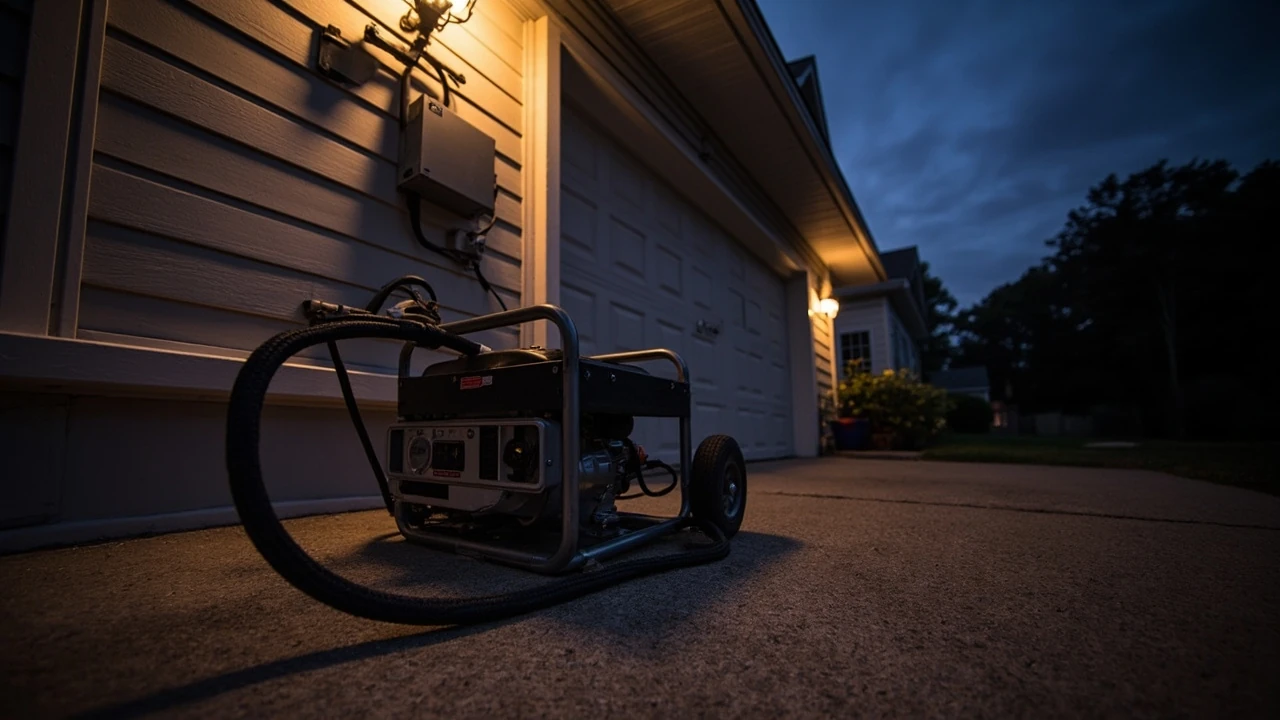
How to connect a generator to your house the safe way
A single storm can drop a neighborhood into darkness for hours or even days, and most homeowners only think about backup power after the lights have already gone out. The difference between a generator that keeps your family comfortable and one that starts a house fire almost always comes down to how it is connected. Learning how to connect a generator to your house before an emergency arrives is what separates a calm, prepared household from a chaotic one.
Connecting a portable generator is not simply a matter of running an extension cord into a wall socket. There are real electrical, fire, and carbon monoxide risks involved, and the rules exist because people have been hurt by shortcuts. This guide walks through the realistic options a homeowner can choose from, the equipment each one requires, the step-by-step process, and the mistakes worth avoiding.
Why the right connection method matters
A generator pushes out the same kind of electricity your utility does, but in a different way. The grid behaves like an infinite battery, while a portable generator is a small, sensitive source that has to be isolated from everything else while it runs. If your house wiring is still tied to the utility lines when your generator kicks in, the generator’s power can flow back out through the transformer and energize what utility crews think is a dead line. That situation, called backfeeding, is one of the leading causes of lineworker injuries during storm restoration.
Backfeeding is not the only risk. Plug a generator directly into a wall outlet with a homemade cord and you can easily push more current through the household wiring than the wires and breaker are rated for. That is a real path to a house fire. Carbon monoxide poisoning is the other major hazard, and it has nothing to do with wiring: a generator running in a garage, under a deck, or next to an open window can fill a home with odorless exhaust in minutes.
Choosing a proper connection method addresses all three risks at once. It isolates the generator from the grid, it limits the current to circuits the wiring can actually handle, and it gives you a reason to keep the generator outside where the exhaust belongs.
Three ways homeowners link a generator to a house
There is no single “right” way to connect a generator to a house. The three methods used in most U.S. homes differ in cost, complexity, and how much of the home they can power. Picking the right one depends on your panel, your budget, and how often you expect to use the generator.
Option 1: Extension cords to individual appliances
The simplest approach is to skip the home wiring entirely. You run heavy outdoor-rated cords from the generator to the appliances that matter most, like a refrigerator, a space heater, or a phone charger. This method requires no electrician, no permits, and no modifications to your panel. The catch is that you can only power items you can reach with a cord, and you have to be very careful about which appliances you plug in.
Most portable generators have a 120/240-volt twist-lock outlet, two or three standard household outlets, and sometimes a 30-amp or 50-amp receptacle. The wattage rating of each outlet tells you what you can safely run through it. If you try to pull more watts than the outlet is rated for, the breaker on the generator will trip, or worse, the cord or outlet will overheat.
Option 2: Transfer switch
A transfer switch is a dedicated metal box, usually mounted next to the main breaker panel, that lets you power selected household circuits from the generator. The switch physically disconnects those circuits from the utility feed before it ties them to the generator, which prevents backfeeding. Most models are “manual,” meaning you flip a lever to change sources, and they typically cover 6 to 10 circuits.
Transfer switches are the option most electricians recommend. They are code-compliant in every U.S. jurisdiction, they keep your household wiring protected, and they let you run things that are hard to reach with a cord, like a furnace blower, a well pump, or a kitchen circuit. The downside is cost: professionally installed transfer switches usually run from about $500 to $2,000 depending on the number of circuits and the complexity of the install.
Option 3: Interlock kit on the main breaker panel
An interlock kit is a mechanical bracket that bolts onto the main breaker panel and makes it physically impossible to have the main breaker and the generator breaker on at the same time. When the power goes out, you turn off the main, slide the interlock, and turn on the generator breaker. Power flows from the generator inlet box through that breaker into the panel.
Interlock kits are popular because they cost a fraction of a transfer switch, typically $50 to $150 for the parts plus an electrician’s labor. The trade-off is that you have to remember the sequence every time. Flip the wrong switch first and you can backfeed the grid or damage the panel. Many local jurisdictions accept interlock kits as a code-compliant alternative to a transfer switch, but not all of them do, so checking with the local building department matters.
What you will need before the power goes out
The most common mistake homeowners make is buying a generator during the first hours of a storm and then trying to figure out the rest in the dark. Getting the equipment together ahead of time turns a stressful night into a manageable one.
- The generator itself, sized for the appliances or circuits you intend to power, with enough fuel for at least 24 hours of expected runtime.
- A heavy outdoor-rated generator extension cord if you are using the cord method, with a gauge matched to the amperage draw and distance.
- A transfer switch or interlock kit, professionally installed, if you plan to power household circuits.
- A weatherproof generator inlet box mounted on the exterior wall, wired to the transfer switch or interlock breaker.
- Carbon monoxide detectors with battery backup on every floor of the home, tested within the last six months.
- A grounded location outdoors for the generator, at least 20 feet from doors, windows, and vents, on a level surface that does not trap exhaust.
- A printed checklist of the start-up and shut-down sequence, kept with the generator, because it is easy to forget steps in the dark.
Sizing the generator to what you actually want to run
Oversized generators waste fuel, and undersized ones trip their own breakers every time a motor starts. The honest answer to “what size generator do I need” depends on the starting wattage of the largest motor in the house, because electric motors can pull two to three times their running wattage for a fraction of a second at start-up.
For most homes, the realistic options break into three tiers.
| Tier | Typical output | What it can power | Common use |
|---|---|---|---|
| Small portable | 2,000 to 4,000 watts | Fridge, phone chargers, a few lights, a small fan | Cord method, brief outages, apartments |
| Mid-size portable | 5,000 to 8,500 watts | Fridge, freezer, furnace blower, sump pump, some 120V circuits | Most homeowners using a transfer switch |
| Large portable or home standby | 10,000 watts and up | Most 120V circuits, well pump, electric range, central air in some homes | Larger homes, frequent outages, off-grid supplements |
Add up the running watts of the items you expect to use at the same time, identify the single largest motor among them, and add its starting watts on top. If the total is below 80 percent of the generator’s rated output, you are in a safe range. A small refrigerator might draw 150 running watts, a furnace blower might draw 600 running watts and 1,800 starting watts, and a window air conditioner might pull 1,200 running watts with a 3,600-watt spike. A 7,500-watt generator can handle a mix like that; a 3,000-watt unit cannot.
Safety equipment and placement basics
Two safety rules matter more than any others: keep the generator outside, and isolate it from the grid. Every other safety step is a refinement of those two ideas.
| Hazard | What causes it | How to prevent it |
|---|---|---|
| Carbon monoxide poisoning | Exhaust from a generator running indoors, in a garage, or too close to openings | Operate outdoors, at least 20 feet from the home, away from windows and vents; install CO detectors |
| Electrocution of utility crews | Backfeeding through the main panel while the utility line is being repaired | Use a transfer switch or interlock kit; never use a suicide cord |
| House fire | Overloaded cords, undersized wiring, or improper connection of the generator to the home | Match cord and breaker ratings to the load; have a licensed electrician do the install |
| Burns from hot surfaces | Touching the muffler or engine block during or right after operation | Let the unit cool before refueling; keep kids and pets away |
| Fuel fires | Spilled gasoline near a hot engine | Refuel only when the engine is off and cool; store fuel in approved containers |
The “suicide cord” deserves its own warning. A suicide cord is a homemade adapter with two male ends, one plugged into the generator and the other into a wall outlet to backfeed the panel. It is illegal in most jurisdictions, it is the single most common cause of generator-related electrocution, and it has no place in a home setup. The nickname exists because of how often people have died using one. A transfer switch or interlock kit makes the same task possible without that risk.
Step-by-step: connecting a generator using a transfer switch
The transfer-switch path is the most code-friendly way to learn how to connect a generator to your house, and it is the option most electricians install by default. The exact panel you have will change the details, but the underlying sequence is the same.
- Move the generator to its prepared outdoor spot, at least 20 feet from the house, on a level surface, with the exhaust pointing away from doors and windows.
- Connect the outdoor-rated power cord from the generator’s locking outlet to the inlet box mounted on the exterior wall. Push the connector in and twist to lock it.
- In the house, walk to the transfer switch and set every individual circuit breaker inside the switch to the OFF position.
- Flip the transfer switch lever from LINE to GENERATOR. The switch should make a firm mechanical click; on a manual switch, this physically disconnects the panel from the utility feed.
- Start the generator outdoors and let it warm up for about a minute. Confirm the engine is running smoothly and that no warning lights or fault codes are showing.
- Return to the transfer switch and turn on the circuits you actually need, one at a time. Start with the largest motor loads, like a well pump or a furnace, so any startup surge hits the generator when it is least loaded.
- Watch the generator’s meter or display. If the load climbs above about 80 percent of rated output, turn a circuit back off and decide whether that load is essential.
Step-by-step: connecting a generator using an interlock kit
An interlock kit is a cheaper alternative, and the procedure is very similar, but the order of operations is stricter because the safety depends on the mechanical bracket doing its job.
- Place the generator in its outdoor location and connect the cord from the generator to the inlet box just as you would with a transfer switch.
- At the main breaker panel, turn the main breaker OFF. This isolates the home from the utility grid.
- Slide the interlock plate so it now allows the generator breaker to be turned on. The bracket is designed to physically block that breaker until the main is off.
- Turn the generator breaker ON. Power from the inlet box now flows into the bus bars that feed the rest of the panel.
- Start the generator outside and let it stabilize for a minute.
- Turn on the individual branch breakers you want to power, working from the largest motor load to the smallest, so the generator sees a gradual increase instead of a single spike.
- When utility power returns, reverse the sequence exactly: turn off branch circuits, turn off the generator breaker, slide the interlock back, then turn the main breaker back on.
Step-by-step: running appliances with extension cords only
If you decide to keep things simple and use heavy extension cords, the process is shorter, but the discipline is just as strict. A mistake here is more likely to start a fire than a mistake with a transfer switch, because the cords are the only thing protecting the wiring.
- Place the generator outdoors, away from windows, doors, and vents, before you start it. Never run it in a garage with the door open; that is still indoors for practical purposes.
- Use only outdoor-rated cords that are sized for the amperage. A 12-gauge cord works for most small loads up to 50 feet; a 10-gauge cord is better for longer runs or higher-draw appliances.
- Plug appliances directly into the generator or into the cord’s female end. Do not chain cords together, and do not run a cord through a doorway where it can be pinched or tripped over.
- Switch appliances on one at a time, starting with the largest motor load, to avoid simultaneous starting surges.
- Never backfeed a wall outlet from a cord. The outlet’s wiring is not protected for the load, and the moment the utility power returns you can damage the panel and any electronics still on.
Starting and stopping the generator without damaging it
How you start and stop a portable generator matters as much as how it is connected. Most failures happen during the first few minutes of operation, when the engine is cold and the operator is rushed.
For a cold start, move the generator to its spot, connect the cord to the inlet box if you have one, make sure the fuel valve is open, set the choke to the start position, and pull the cord or press the electric start button. Once the engine fires, move the choke to the run position over a few seconds. Let the generator idle for a minute before applying any load. That warm-up lets the oil circulate and the voltage regulator settle.
For a hot restart, leave the choke off, open the fuel valve if it is closed, and start the engine. Do not pump the throttle or add choke on a warm engine; you will flood it.
For shut-down, turn off the largest loads first so the engine is not pulling a heavy load when you cut it. Let it idle for a minute or two to cool the internal components, then turn the engine switch to OFF and close the fuel valve. Letting the carburetor run dry before storage prevents fuel from gumming up the jets.
Common mistakes homeowners make when learning how to connect a generator to your house
Even motivated homeowners repeat the same handful of errors. Catching these before an outage saves money, equipment, and sometimes a life.
- Running the generator too close to the house. Twenty feet is the rule of thumb, and even then, exhaust can drift in through attic vents or open upstairs windows.
- Skipping the transfer switch or interlock kit. A “temporary” backfeed setup that has worked for years is still illegal and still dangerous.
- Undersizing the cord. A light-duty indoor cord can overheat and melt within minutes when carrying a real load.
- Refueling while the engine is hot. Spilled gas on a hot muffler is a fire, every time.
- Forgetting to switch the fuel valve off. A stuck float can flood the engine and hydrolock it, bending a connecting rod.
- Ignoring maintenance. A generator that has not been started in two years is often the one that will not start when the storm arrives.
Maintenance that keeps the generator ready
A generator is a piece of mechanical equipment with fuel, oil, and moving parts. If it sits unused for nine months of the year, small problems become big ones. A simple maintenance routine keeps it ready for the next outage.
- Run the generator for about 15 minutes every month under a light load. This burns off moisture, keeps seals lubricated, and verifies that the engine will actually start when you need it.
- Change the engine oil on the schedule the manufacturer recommends, which is often after the first 20 to 25 hours of use and then every 100 hours or once a year.
- Replace the air filter and spark plug once a year, or sooner if the unit runs in dusty conditions.
- Use fresh fuel. Gasoline begins to degrade within about 30 days, and old fuel is the most common reason a generator will not start. Adding a fuel stabilizer at fill-up slows this down.
- Inspect the power cords for cracked insulation, exposed wire, or bent prongs. Replace any cord that looks questionable; cords are cheaper than house fires.
- Test the transfer switch or interlock kit once a year by simulating an outage. The few minutes it takes can expose a mechanical problem before you depend on it.
How local rules and permits shape the install
Electrical work on a home is regulated at the city or county level in most of the United States, and generator connections are no exception. A transfer switch, interlock kit, or new inlet box usually requires a permit and an inspection, and most jurisdictions require the work to be done by a licensed electrician. Some homeowner associations also have rules about where a generator can be placed, how loud it can be, and how long it can run.
Before buying equipment, a quick call to the local building department answers three useful questions: whether a transfer switch or interlock kit is permitted at all in your jurisdiction, what inspections are required, and whether there is a noise ordinance that affects placement. Skipping the call can mean paying to redo the install if an inspector flags it later.
Frequently asked questions
Can I just plug a generator into a wall outlet with an extension cord?
You should never backfeed a wall outlet from a generator, even with an extension cord. It is unsafe, it is illegal in most places, and it can injure or kill utility workers. Use a transfer switch, an interlock kit, or run individual appliances directly from the generator instead.
Do I really need a transfer switch to connect a generator to my house?
Yes, if you want to power anything wired into the panel. A transfer switch is the safest and most universally accepted way to do it, and an interlock kit is a lower-cost alternative where the local jurisdiction allows it. Both options isolate the home from the grid, which is the part that actually prevents backfeeding.
How far from the house should a generator run?
Twenty feet is a common minimum, and the generator should sit outdoors with the exhaust pointed away from the home. The exhaust contains carbon monoxide, which can build up in living spaces even when the generator is several yards away. A working CO detector on every floor adds a second layer of protection.
What size generator do I need for a typical house?
Most homeowners who want to keep a fridge, a freezer, the furnace blower, and a few lights running end up with a 5,000 to 8,500-watt portable unit. Larger homes with central air or well pumps usually move up to 10,000 watts or consider a standby generator.
Is it safe to run a generator in the rain?
Generators need to be protected from direct rain and standing water, but they also need to be outdoors. A purpose-built generator tent or a small open-sided canopy on a level surface keeps the unit dry without trapping exhaust. Never cover a generator with a tarp that blocks airflow.
How long can a portable generator run continuously?
Most portable generators are designed to run for about 8 to 12 hours on a full tank of gasoline at half load. Some models run longer on propane or natural gas. For multi-day outages, plan to refuel every 8 to 10 hours, let the engine cool, and never refuel near a hot engine.
Can I install a transfer switch or interlock kit myself?
It depends on local rules. Many jurisdictions require a licensed electrician to do panel work, and a mistake can damage the panel or create a fire hazard. A qualified electrician can typically install either option in a few hours, and the cost is modest compared with the safety benefit.
What is the difference between a transfer switch and an interlock kit?
A transfer switch is a separate sub-panel that lets you choose which circuits run on the generator and physically disconnects them from the utility feed. An interlock kit is a bracket on the main panel that makes it impossible to have the main breaker and the generator breaker on at the same time. Both prevent backfeeding; the transfer switch is more convenient, the interlock kit is less expensive.
Do I need a permit to connect a generator to my house?
In most U.S. jurisdictions, installing a transfer switch, interlock kit, or generator inlet box requires an electrical permit and an inspection. Calling the local building department before buying equipment is the fastest way to confirm the exact requirements for your area.
How do I keep the generator from being stolen during a long outage?
Security is a real concern during multi-day blackouts, when generators are sitting outside in the dark. A heavy chain run through the frame and locked to a fixed object, a motion-activated light pointed at the unit, and a clearly visible “generator” label on the cord are practical steps. Some homeowners also bring the generator inside a locked shed between uses, as long as the shed is well-ventilated enough to keep exhaust from building up.
Leave a Reply