
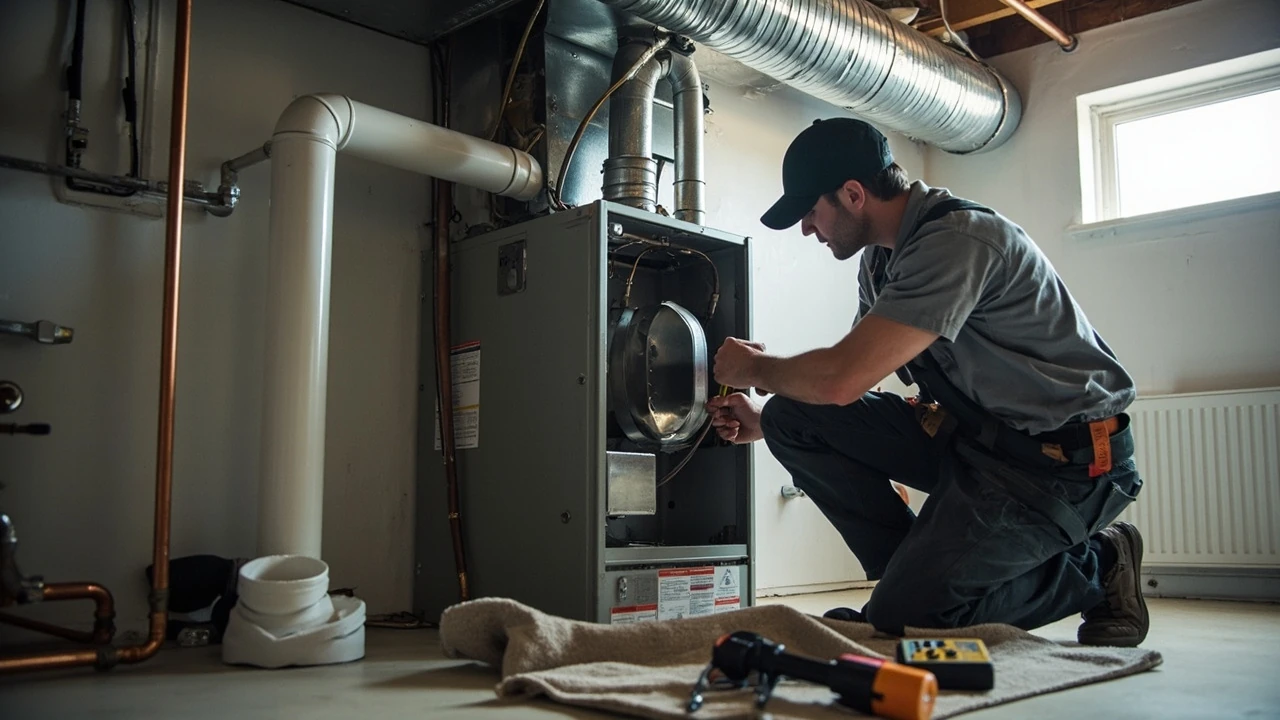
Furnace installation services: what to expect and how to plan
Replacing a furnace is one of the larger HVAC decisions a homeowner will make, and most of the cost and disruption happens in a single day. Furnace installation services cover everything from sizing the new unit to hauling the old one away, and the quality of that work shapes your energy bills, your comfort, and the lifespan of the equipment for the next fifteen to twenty years. Knowing what the job actually involves makes it much easier to compare quotes, ask the right questions, and avoid paying for shortcuts that show up as problems later.
This guide walks through the full scope of a typical residential furnace replacement: when replacement makes more sense than another repair, how a load calculation drives equipment sizing, what the installation crew does on site, and which decisions you control as the homeowner. The goal is practical, not promotional. If you are weighing a new furnace in 2026, the sections below give you a checklist you can use with any contractor you talk to.
When furnace installation services make more sense than another repair
No homeowner wants to replace a furnace a year too early, and no one wants to wait until the unit quits on the coldest night of the year. Most HVAC contractors watch the same handful of signals when they advise a customer to start pricing replacement. These signs are worth tracking on any furnace that is more than ten years old.
- Age. The typical residential furnace has a service life of about fifteen to twenty years, depending on the brand, fuel type, and how well it has been maintained. Once a unit is past fifteen, every additional season carries a higher risk of a major component failure.
- Rising energy bills with no change in usage. A furnace that slowly loses efficiency will burn more fuel to deliver the same amount of heat. If your gas or electric bill keeps climbing year over year and your thermostat habits have not changed, the heat exchanger or burner assembly is often the culprit.
- Frequent service calls. Each repair buys time, but a furnace that needs a visit every season is usually telling you that one component after another is wearing out.
- Unusual noises. A low hum is normal. Rattling, banging, squealing, or popping point to a bearing, a cracked heat exchanger, or a delayed ignition that should be inspected.
- Visible corrosion or rust on the cabinet or around the burner door. Exterior rust is a visible sign of internal wear, and a cracked heat exchanger can leak combustion gases into the home.
- Inconsistent room temperatures. Cold spots, a furnace that runs constantly, or one that short-cycles on and off all point to a system that is no longer moving air the way it should.
Heating professionals use a similar decision framework when they walk a homeowner through replacement options, and the same logic applies if you are in a cold climate or a mild one. If two or three of these signs describe your situation, it is worth requesting a written quote for replacement rather than booking another service call.
What furnace installation services actually include
The phrase “furnace installation” covers a wider scope of work than most homeowners expect. A professional job is not just swapping a metal box for another metal box. It is a sequence of steps that protect your home, your warranty, and your long-term operating cost.
1. Home assessment and load calculation
Before any equipment is selected, the contractor measures the home. That usually means a Manual J load calculation: square footage, ceiling height, insulation levels in the attic and walls, window type and orientation, air leakage, and the local design temperature. The result is a number in BTUs per hour that tells the crew what size furnace your home actually needs. Oversized equipment short-cycles and wears out fast; undersized equipment runs nonstop and never quite heats the home on the coldest mornings.
2. Equipment selection
With the load in hand, the contractor proposes a unit that matches the BTU requirement, the duct layout, and your fuel type. Choices typically include single-stage, two-stage, and modulating gas valves, as well as variable-speed blower motors. Each step up in modulation adds efficiency and comfort, and each step adds cost. The right pick depends on your climate, your budget, and how long you plan to stay in the home.
3. Ductwork inspection and modifications
New equipment is only as good as the ducts that carry the air. The crew should inspect the supply and return trunks, check for disconnected or crushed runs, and confirm that the existing duct sizing matches the new furnace’s airflow. If your home has older ducts in an attic or crawlspace, sealing joints with mastic and adding insulation may be part of the same project.
4. Removal of the old furnace
The crew disconnects gas, electrical, and venting, drains any condensate lines, and removes the old unit from the utility room or closet. In many installations, the old furnace is hauled away the same day. In some regions, refrigerant or mercury components require special handling, and the crew will explain the disposal plan in the quote.
5. Setting the new furnace and making connections
The new cabinet is set on a level pad or suspended from the floor joists, depending on the installation. The crew connects the gas line with a properly sized drip leg and shutoff valve, runs new PVC venting for the inducer motor, wires the thermostat and any air handler controls, and ties the condensate line into a drain or condensate pump.
6>Commissioning the system
A working furnace is not yet a properly installed one. Commissioning is the step that separates a careful contractor from a rushed one. The crew should:
- Pull a vacuum on refrigerant lines if a coil was added at the same time.
- Check static pressure across the blower to confirm the duct system is not too restrictive.
- Measure temperature rise across the heat exchanger and compare it to the manufacturer spec.
- Set the blower speed for the correct CFM per ton.
- Verify the gas pressure at the manifold with a manometer.
- Test the igniter, the inducer, the flame sensor, and the limit switches.
- Program the thermostat and walk the homeowner through the new equipment.
A job that ends with a written commissioning report, not just a working blower, is the standard you want.
How long the installation takes
A straight furnace swap in a home with accessible ductwork, a gas line that is already in place, and a standard utility room typically takes a single workday, often four to eight hours. Several factors can stretch that timeline:
| Situation | Typical impact on timeline |
|---|---|
| Straight swap, existing ductwork, accessible utility room | One day, often 4-8 hours |
| New ductwork or extensive duct modifications | Add one to three days |
| Conversion from a different fuel type (oil to gas, electric to gas) | Add one to two days plus utility coordination |
| Adding air conditioning at the same time | Add one to two days for line set, coil, and outdoor unit |
| Crawlspace or attic air handler with difficult access | Add a half day to a full day |
| Code-required upgrades to gas line, venting, or electrical | Add a half day or more, may require a separate permit |
If your installer quotes a multi-day project, ask for the breakdown. A longer timeline is fine when it reflects real work, but a vague “we will be there a while” usually means the scope was not pinned down in writing.
What drives the cost of furnace installation services
There is no single national price for a residential furnace, because the cost is shaped by your home as much as the unit. A few thousand dollars is a reasonable starting point for a basic installation, and the final number is determined by a handful of variables.
| Cost driver | How it changes the price |
|---|---|
| Home size and load calculation | Larger homes need more BTUs, larger cabinets, and larger gas lines, which raises equipment and labor cost. |
| Efficiency tier (80%, 90%, 95%+ AFUE) | Higher efficiency furnaces cost more up front and save more on fuel; payback depends on climate and fuel price. |
| Single, two-stage, or modulating gas valve | Each step up in modulation adds equipment cost but improves comfort and efficiency. |
| Existing ductwork condition | Sealing, resizing, or adding return runs adds labor and materials. |
| Code-required upgrades | New gas shutoff, dedicated electrical circuit, condensate routing, or venting changes add cost. |
| Disposal of the old unit | Usually included, but worth confirming in the quote. |
| Permit and inspection fees | Most jurisdictions require a mechanical permit for furnace replacement, and the cost is passed through. |
| Region and labor market | Urban areas and cold-climate markets tend to run higher than rural or mild-climate regions. |
When you compare quotes, line them up by the same load calculation, the same efficiency tier, and the same scope of ductwork. A low price often means a smaller unit, no commissioning, or both.
Choosing the right efficiency tier
Furnace efficiency is measured by AFUE, or Annual Fuel Utilization Efficiency, which expresses how much of the fuel the furnace burns actually becomes heat in your home. A unit rated 80% AFUE turns 80% of the fuel into heat and vents the rest as exhaust. A 96% AFUE unit vents only 4%. That gap sounds small on paper, but over a heating season it adds up.
The right tier for your home depends on a few things:
- Climate. The colder your winters, the more hours your furnace runs, and the faster a higher AFUE pays back.
- Fuel price. Higher gas or oil prices make efficiency gains more valuable per percentage point.
- Vent type. High-efficiency units (typically 90% and above) use PVC venting for their cooler exhaust. Older homes with masonry chimneys may need a new vent path, which adds cost.
- Budget. The premium for a high-efficiency model is real, and a mid-tier 95% unit is often the best value once you factor in rebates and fuel savings.
Two-stage and modulating burners cost more than single-stage units, but they deliver a quieter, more even heat and tend to keep the home more comfortable during shoulder seasons when full fire is not needed.
What to ask before you sign a quote
Two written quotes from different contractors are worth more than a single estimate, even if the second visit costs you an hour. The questions below help you compare apples to apples.
- What is the Manual J load calculation for my home, and what size furnace is being proposed?
- Is the quote for a single-stage, two-stage, or modulating unit, and at what AFUE?
- What does the commissioning process include, and will I get a written report?
- Are permit and inspection fees included, and who pulls the permit?
- Is ductwork modification included if needed, or is it a separate change order?
- What is the warranty on parts and labor, and is the labor warranty from the manufacturer or the contractor?
- Is the old furnace removal included?
- What brand and model number is on the quote, so I can verify the equipment?
- Are rebates, tax credits, or utility incentives included in the price?
- What is the payment schedule, and when is the final balance due?
Any hesitation on these questions is a signal to slow down. A contractor who can answer them in plain language on the first visit is usually the same one who will show up on time for the installation.
What happens on installation day
On the day of the job, the crew typically arrives in a window in the morning. The lead tech walks the homeowner through the plan, confirms the location of the furnace, and reviews any ductwork changes. Before the crew leaves, your home should look much the way it did when they arrived, with the obvious exception of a new furnace in the utility room.
A few things are worth doing on your end before the crew arrives:
- Clear a path to the utility room, basement stairway, or attic access. A clear path saves labor time and reduces the risk of scuffs.
- Move any stored items at least three feet away from the existing furnace.
- Plan for the home to be without heat for several hours, even on a mild day. A space heater and extra blankets help if the work runs into the evening.
- Keep pets and children away from the work area, especially while gas and electrical lines are being cut.
- Ask where the crew will set tools and the old furnace. A garage or a section of the driveway is common.
After commissioning, the lead tech should walk you through the new thermostat, the filter location, and the maintenance schedule before they leave. A short handoff on day one saves a service call later.
Common add-ons that pair with a new furnace
Many homeowners bundle other work with a furnace replacement, because the labor to do certain tasks is much cheaper when the crew is already on site with the duct system open.
- Air conditioning coil and line set. Adding cooling at the same time is usually cheaper than a separate visit later.
- Whole-home humidifier. A humidifier mounted on the supply plenum is much easier to install while the duct is open.
- Electronic air cleaner or upgraded media filter. The cabinet mounts on the return side and improves indoor air quality.
- Smart thermostat. A new thermostat is often included with the new furnace, and the install is essentially free with the job.
- Carbon monoxide detector upgrade. Most local codes now require a low-voltage or hardwired CO detector near the utility room.
None of these are required, and a contractor who pushes them as a package should explain what each one actually does for your home. As a general rule, a humidifier pays off in dry climates, a media filter pays off for anyone with allergies, and a smart thermostat pays off for anyone who wants scheduling and remote access.
How to vet a furnace installation contractor
License, insurance, and references are the basics, but they only tell you whether the contractor is allowed to do the work. The questions below tell you whether they are likely to do it well.
- How many furnace installations did your crew complete last year? Volume is a useful signal of routine.
- Do you use your own employees or subcontractors for the install? The quality of the work depends on who actually shows up.
- What is your typical response time if something goes wrong in the first 30 days?
- Can I see a sample commissioning report from a recent job?
- Are you certified by the brand of equipment you are proposing? Most major furnace brands require installer certification for the full warranty to apply.
- What does your maintenance plan cover, and is it required to keep the warranty in force?
A company that has installed hundreds of furnaces a year, employs its own install crews, and can produce a commissioning report from memory is the kind of company that tends to deliver clean work.
Warranty, maintenance, and what protects the new equipment
Most residential furnaces come with two layers of warranty: a parts warranty from the manufacturer, often ten years on major components, and a labor warranty from the installer, which can range from one year to ten years depending on the contractor and the equipment tier. Read both documents. A long parts warranty is not worth much if the labor warranty is only a year.
Two habits protect the warranty and the equipment over the long run:
- Annual maintenance. A yearly visit that includes a combustion analysis, a heat-exchanger inspection, a blower check, and a filter swap keeps the unit efficient and catches small issues before they become warranty claims.
- Filter changes. A clogged filter is the single most common cause of furnace failure. The manufacturer will tell you the filter size and the replacement interval, and the homeowner who follows that schedule avoids most avoidable service calls.
Keep the commissioning report, the warranty documents, and the maintenance records in a single folder. If a warranty claim is ever disputed, that folder is the difference between a covered repair and an out-of-pocket one.
Frequently asked questions
How long does a typical furnace installation take?
A straight swap in a home with accessible ductwork and existing utilities usually takes four to eight hours, often in a single day. Ductwork modifications, fuel conversions, or adding air conditioning at the same time can extend the project to two or three days.
How do I know what size furnace my home needs?
Sizing is based on a Manual J load calculation, which accounts for square footage, insulation, window type, air leakage, and the local design temperature. A good contractor will perform this calculation rather than guess based on the size of the old unit.
Is it worth replacing a furnace before it fails?
In most cases, yes, especially if the existing unit is more than fifteen years old, has rising energy bills, or needs frequent repairs. Planned replacement lets you choose the equipment and the timing rather than making a rushed decision during a winter breakdown.
What is AFUE and what efficiency should I pick?
AFUE is the percentage of fuel that becomes usable heat in your home. A 95% to 98% AFUE unit is the most common upgrade choice today and offers strong long-term savings in most climates, especially when paired with a two-stage or modulating gas valve.
Do I need a permit to replace a furnace?
Most jurisdictions require a mechanical permit for a furnace replacement, and the work must pass a final inspection. Your contractor should pull the permit and schedule the inspection, and the cost is typically included in the written quote.
Can I add central air at the same time as a new furnace?
Yes, and it is usually cheaper to add a coil, line set, and outdoor condensing unit while the ductwork is already open. A combined install also ensures the new furnace and air conditioner are sized and commissioned as a matched system.
What maintenance does a new furnace need?
A yearly professional tune-up is the standard, including a combustion check, a heat-exchanger inspection, blower measurement, and a thermostat calibration. Filter changes every one to three months, depending on the filter type and household conditions, keep the system running between visits.
What should be in writing before the crew arrives?
The quote should spell out the model number, AFUE, the load calculation result, the scope of ductwork work, the permit and inspection plan, the warranty terms for parts and labor, and the disposal of the old unit. Anything not in writing is a candidate for a change order on installation day.
Are rebates or tax credits available for high-efficiency furnaces in 2026?
Utility rebates and federal or state tax credits for high-efficiency heating equipment change frequently. Your contractor and your utility’s website are the two most reliable sources for current programs in your area, since incentives depend on the equipment tier, the fuel type, and where you live.
What is the typical lifespan of a new furnace?
A well-installed, well-maintained residential furnace typically lasts fifteen to twenty years. Units in milder climates, on the right-sized equipment for the home, tend to reach the upper end of that range. Annual maintenance and prompt filter changes are the two habits that most influence lifespan.
Leave a Reply