
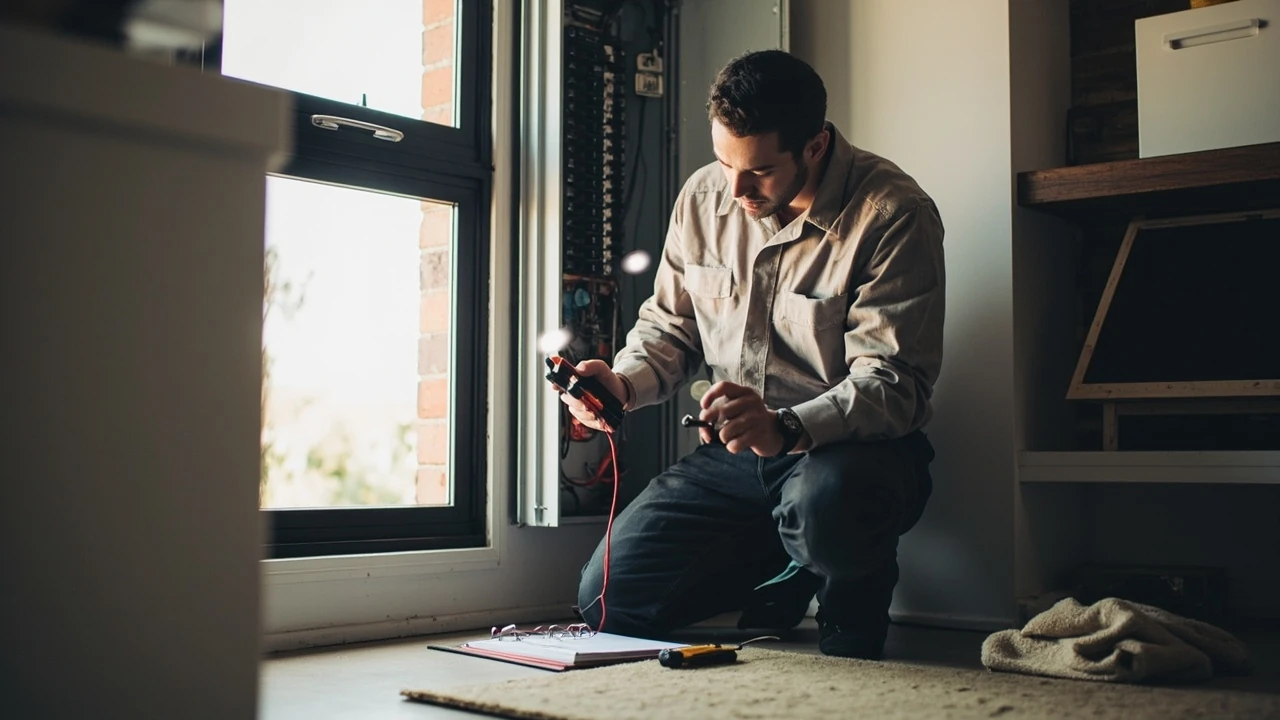
Home electrical inspection: what it covers and when to book one
A burning smell near a light switch, a breaker that trips every time the microwave and toaster run together, or a panel that still uses screw-in fuses can all be reasons to ask about a home electrical inspection. In other cases the trigger is quieter: a home purchase, a remodel, a rental conversion, or a property that has not had its wiring looked at in twenty years. The visit is a structured check of the electrical system rather than a repair, and knowing what to expect helps you decide whether to schedule one and how to prepare.
Below is a practical walkthrough of what a typical home electrical inspection covers, who performs it, the problems that show up most often, how it differs from a general home inspection and from a code-compliance inspection, and when it actually pays to schedule one. It also covers what a useful report looks like, the safety limits of the process, and the practical decisions that usually follow.
What a home electrical inspection actually is
A home electrical inspection is a visual and instrument-based review of a property’s electrical system, focused on safety, wear, and obvious defects rather than on the cosmetic condition of fixtures. The goal is to identify conditions that could cause shock, fire, or equipment damage, and to flag components that are outdated, overloaded, or installed in a way that no longer matches current residential practice.
It is not the same as a building-code inspection performed by a local jurisdiction. Code inspections happen at specific stages of new construction or major permitted work, and they confirm that the installation met the code that was in force when the permit was pulled. A home electrical inspection is a private, client-paid review that describes the present condition of the system, often using the latest published standards as a reference for what is considered safe today. The general framework is similar to the one used during a broader home inspection visit, where the written report and the inspector’s training are what give the findings their weight.
How it differs from a general home inspection
Most buyers are familiar with the general home inspection that happens during a real estate transaction. That inspection is a broad survey of the major systems: structure, roof, plumbing, HVAC, and the electrical system as one of several categories. The electrical portion of a general home inspection is usually a relatively quick visual review of the panel, a sample of outlets, and obvious hazards.
A dedicated home electrical inspection goes deeper. The inspector usually spends more time at the panel, removes the cover, checks breaker sizing against conductor sizes, looks for evidence of past overheating, tests more receptacles, and may use instruments to check voltage, grounding, and the operation of GFCI and AFCI protection. If you are buying or selling a property with an older electrical system, the specialist visit is usually the more useful of the two.
Who performs a home electrical inspection
Three groups of people commonly describe their work as a home electrical inspection, and the difference matters:
- Licensed electricians are the most qualified for hands-on evaluation. They are trained and authorized to work on electrical systems, understand how older wiring methods interact with modern loads, and can issue repair quotes on the spot. In many jurisdictions, only licensed electricians can legally open a service panel cover or remove devices for inspection.
- Specialist electrical inspectors focus on inspections rather than repairs. They typically have a background as electricians and additional training in diagnostic methods, and they sell a written report rather than a repair contract.
- General home inspectors include the electrical system in their broader work. Their training and time on the electrical portion are limited compared with a specialist, and many explicitly tell clients that they do not open panels, do not de-energize equipment, and recommend a specialist for older or unusual systems.
For most homeowners, a licensed electrician is the safer choice when the goal is to make decisions about repairs, upgrades, or further evaluation. A general home inspector is appropriate for a high-level snapshot before a purchase, with the understanding that their electrical findings will be limited.
What a home electrical inspection typically covers
There is no single national standard for what every electrical inspection must include, but a thorough review walks through the same major areas. The list below reflects what a competent inspector will spend time on, and what you should expect to see in a complete report.
Service entrance and main panel
The service entrance is where utility power arrives at the building, and the main panel is where it is distributed. The inspector typically checks the service rating (often 100, 150, 200, or 400 amps for residential), the condition of the meter base and service mast, the grounding electrode system, and the bonding of metallic water and gas piping where present. Inside the panel, the inspector looks for:
- Correct breaker sizing relative to conductor size;
- Evidence of overheating, such as discoloration, melted insulation, or a burning smell;
- Double-lugs, tandem breakers used where not allowed, and missing breaker fill plates;
- Loose or corroded terminations that can cause arcing;
- Proper labeling of circuits so a future occupant can identify what each breaker controls.
Branch circuit wiring and device checks
Branch circuits are the wires that run from the panel to outlets, lights, and appliances. The inspector will not see most of this wiring, since it is hidden in walls, but they can spot issues at accessible points. They typically test a representative sample of receptacles for correct wiring, polarity, and grounding, and check a sample of switches and junction boxes for safe box fill, intact insulation, and absence of splices outside of boxes.
GFCI and AFCI protection
Ground-fault circuit interrupters (GFCIs) protect against shock by tripping when current leaks along an unintended path, such as through a person. Arc-fault circuit interrupters (AFCIs) protect against fire by detecting dangerous arcing in wiring. Current residential standards call for GFCI protection in kitchens, bathrooms, laundry areas, garages, basements, and outdoor locations, and for AFCI protection in many living-area circuits. A home electrical inspection checks whether the existing protection matches current expectations and flags unprotected circuits.
Smoke and carbon monoxide alarms
Although alarms are separate devices, most inspectors treat them as part of the electrical review. They typically check the presence, age, and placement of smoke alarms, the presence of carbon monoxide alarms near sleeping areas, and whether the alarms are interconnected so that all sound together when one detects a problem.
Special systems and high-load appliances
High-draw appliances deserve attention. The inspector will look at how electric ranges, dryers, water heaters, air handlers, EV chargers, and large window units are wired. The goal is to confirm that each is on a properly rated dedicated circuit, that the breaker matches the conductor and the appliance nameplate, and that the disconnect, where present, is accessible and in good condition.
A practical look at what is usually found
Findings vary widely by age and maintenance history, but a few categories show up again and again. The table below summarizes common findings, what they tend to mean, and the typical next step. It is a generalized overview, not a substitute for a written report on your specific property.
| Common finding | What it often means | Typical next step |
|---|---|---|
| Panel is a recalled or obsolete brand | Documented safety issues or unavailable replacement parts | Specialist evaluation, possible full panel replacement |
| Mixed wire types in the panel (aluminum branch circuits with copper terminations) | Risk of corrosion and loose connections at incompatible metals | Proper AL/CU rated terminations or pigtailing with anti-oxidant compound |
| Missing or failed GFCI protection in wet areas | Modern shock-protection gap; not always an emergency but a real safety improvement | Install or replace GFCI devices on affected circuits |
| Double-tapped breakers (two wires on one breaker) | Often a sign of overcrowding and a possible overheating point | Add a breaker or split the circuit with proper terminations |
| Ungrounded three-prong receptacles | Two-wire system retrofitted with grounded outlets without an equipment ground | Install GFCI protection or run a proper grounding conductor |
| Extension cords used as permanent wiring | Wire not protected; potential overload hidden behind furniture | Have a proper circuit and outlet installed |
| Overfused circuits (breaker larger than conductor rating) | Wires can overheat before the breaker trips | Correct breaker size or upgrade wiring if load requires |
It helps to keep these findings in context. Not every flag is an emergency, and not every recommendation needs to be done immediately. A good report distinguishes between safety issues that warrant prompt action, conditions to monitor, and improvements that can be planned alongside future renovations.
Severity of common findings at a glance
Beyond the type of finding, the priority an inspector assigns matters when you plan repairs. The table below groups typical issues by how urgently they tend to need attention, based on what experienced inspectors flag in residential properties. Use it as a way to triage the report, not as a medical-style severity scale.
| Priority level | Typical conditions in this group | What it usually means for timing |
|---|---|---|
| Address promptly | Overheating signs, double-tapped breakers with discolored insulation, recalled panels, exposed splices, smoke from devices | Schedule repair before the next change of season or before selling the home |
| Plan within months | Missing GFCI or AFCI protection, ungrounded three-prong receptacles, aluminum branch wirings with improper terminations | Group with the next planned electrical visit or renovation |
| Note and monitor | Slightly undersized panel for a future EV charger, older but functional smoke alarms, cosmetic panel labeling gaps | Track in the home file and revisit at the next inspection cycle |
| Informational only | Observations about past workmanship, recommendations for future capacity, minor deviations from current code that are not safety issues | Keep on record for buyers, insurers, or future upgrades |
Most reports present findings in roughly this shape, even if the labels differ. The point is the same: separate the items that need action now from the items that are useful to know about later.
How the inspection unfolds on site
The For additional context, mechanics of a home electrical inspection are fairly consistent. After introductions and a quick walkthrough, the inspector typically follows a similar order:
- Ask the homeowner about known issues, recent trips, and any past electrical work.
- Review the service entrance, grounding, and meter base from outside where accessible.
- Open the main panel and any subpanels, photographing and labeling the configuration.
- Test a representative sample of receptacles and switches on each floor.
- Check GFCI and AFCI devices for correct operation using the device test button and, where appropriate, an external tester.
- Inspect visible wiring in accessible areas such as the basement, attic, garage, and crawl spaces.
- Review the condition and connection of large appliances and any visible dedicated circuits.
- Walk the property again to confirm smoke and carbon monoxide alarm placement.
A typical single-family home takes between 60 and 180 minutes, depending on size, accessibility, and how much is found. Larger homes, multi-unit buildings, or properties with multiple subpanels take longer. The inspector usually does not need to turn off power to the entire house, though individual circuits may be briefly de-energized to remove a panel cover safely.
What a good report looks like
Verbal findings on site are useful, but the deliverable is the written report. A well-constructed report is a working document, not just a list of complaints. The features that matter most are:
- Clear scope: what was inspected, what was not, and any limitations such as locked rooms or inaccessible attics.
- Photographs: annotated images of the panel, key findings, and the locations of unlabeled or missing devices.
- Categorized findings: a way to separate safety concerns from recommended upgrades and from notes for the future.
- Actionable language: each finding is described in enough detail that an electrician or a homeowner can act on it.
- Reference to standards: a mention of the published standards used as a baseline, without implying a code-compliance ruling.
If the report reads as a generic checklist with no photographs, no description of the specific panel, and no mention of your particular home, that is a sign the inspection was rushed. The professional associations that shape the home inspection field publish standards of practice that spell out what a complete report should contain, and the same expectations carry over to specialist electrical work. For broader context on how those standards are organized across the profession, the overview of home inspection practice describes how the written report and the inspector’s training combine to give the findings their weight.
Safety limits of a home electrical inspection
An inspection is a non-invasive review, and the limitations matter. Hidden wiring inside walls cannot be visually inspected. Connections concealed behind drywall, under insulation, or inside finished ceilings can only be checked at accessible points, and what the inspector sees at those points is treated as a sample of the whole. Even when an inspector is thorough, the report describes the system as it appeared at a moment in time, and the condition of any electrical system can change with use, weather, or a single failing component.
There is also a meaningful difference between a safety review and a code-compliance ruling. Inspectors may describe their findings against current residential standards, but a private home electrical inspection is not a legal determination that the home is up to code. That kind of determination happens when local authorities inspect permitted work.
Inspections also do not cover equipment that the inspector is not licensed to evaluate. Some jurisdictions reserve certain categories of work for licensed electricians, and the inspector will tell you in advance if part of the system is out of scope.
When it makes sense to schedule one
There is no universal rule for how often a home should have an electrical inspection, but several situations are strong candidates. The list below reflects how homeowners, buyers, and landlords tend to use them in practice.
- Home purchase, especially of an older property: a dedicated electrical inspection complements the general home inspection when the system has known unknowns, such as a fuse box, aluminum branch circuits, or recent additions done without permits.
- Renovation or addition: an inspection before a remodel confirms that the existing panel has space and capacity for new circuits, and flags any underlying issues that should be addressed before walls are closed up.
- Rental and insurance requirements: some insurers and local ordinances require periodic electrical review for rental properties, particularly older multifamily buildings.
- Recurring symptoms: frequent breaker trips, flickering lights, warm switches, or a burning smell are all reasons to schedule an inspection rather than reset the breaker and move on.
- Major appliance upgrades: installing a high-draw appliance such as an EV charger, a heat pump, or an electric range can push an older service to its limits, and an inspection confirms that the existing infrastructure can support the new load.
- After a major event: lightning strikes, flooding, or significant water intrusion can damage electrical components in ways that are not visible at first, and a follow-up inspection is often wise.
Many electricians suggest a review every 5 to 10 years for owner-occupied homes with modern wiring, and more often for older homes, rental properties, or homes with a history of electrical issues. The exact interval depends on how the home is used and how the system has aged.
What it costs and what affects the price
Costs vary by region, home size, and the depth of the inspection. As a broad generalization, a dedicated home electrical inspection by a licensed electrician or specialist inspector is more expensive than the electrical portion of a general home inspection and less expensive than a full diagnostic visit that includes repairs. Several factors move the price:
- Size and complexity: more panels, more circuits, and more square footage all add time.
- Age and condition: an older home with legacy wiring, multiple additions, and a crowded panel takes longer to inspect thoroughly.
- Region and licensing: markets with higher electrician rates and stricter licensing tend to sit at the higher end of typical ranges.
- Report depth: a short checklist report is cheaper to produce than a fully illustrated document with prioritized recommendations.
It is reasonable to ask for a written estimate up front, along with a clear statement of what is and is not included. Be cautious about unusually low prices, which can indicate a rushed visit, and about combining the inspection with a quote for repairs from the same contractor, which creates an obvious conflict of interest when the same party both finds and fixes the problems.
How to prepare for the visit
A small amount of preparation makes the inspection more efficient and the report more useful. Before the visit, it helps to:
- Clear access to the electrical panel, including any storage in front of it.
- Make a list of known issues: tripping breakers, flickering lights, outlets that do not work, and any recent electrical work.
- Locate documents such as past inspection reports, permits, and any warranties on electrical work.
- Secure pets, make sure all rooms are accessible, and confirm that any locked areas (such as a detached garage) can be opened.
- Plan to be on site for at least part of the visit, so the inspector can ask follow-up questions and the walkthrough at the end can cover findings in person.
Decisions after the inspection
The report is the starting point for a series of practical decisions. The most useful approach is to separate findings into three categories: urgent, planned, and informational. Urgent items are safety issues that should be addressed soon, ideally before the next change of season or before the property changes hands. Planned items are recommendations to address within a defined window, often tied to a budget cycle or an upcoming renovation. Informational items are observations the inspector wants on the record, but that do not require action today.
Once the categories are clear, the next step is to request repair quotes from one or more licensed electricians, ideally using the report’s language directly. Comparing written quotes against the same set of findings is far more useful than comparing verbal estimates, and the report becomes a kind of project document that you can return to over the years.
Common mistakes to avoid
It is easy to misjudge the role of a home electrical inspection. The most common pitfalls include:
- Treating it as a code ruling: a private inspection is a condition report, not a legal determination.
- Skipping it because the general home inspector said the electric looked fine: the general inspection is broad, and a specialist is more thorough for older or complex systems.
- Skipping it because the home is new: even new construction can have defects, and an inspection before the warranty period ends can catch them while the builder is still responsible.
- Combining inspection and repair in a single visit: the inspection is most useful when the inspector’s only job is to describe what they see.
- Ignoring the report: a report that sits in a drawer does not prevent fires. Acting on at least the safety items is the entire point.
How this connects to other home systems
Electrical work rarely happens in isolation. A panel upgrade often goes hand in hand with a service upgrade from the utility, a new meter base, or a coordinated move of other systems. Major remodels trigger a chain of inspections because the work crosses trades, and an electrical inspection is often the first step before a wall is opened or a new appliance is installed. The same is true for external projects: adding a hot tub, a detached workshop, or an EV charger all depend on the existing electrical system having the capacity and configuration to support them. When larger projects are on the horizon, the inspection report becomes a planning document, not just a to-do list.
Frequently asked questions
How long does a home electrical inspection take?
For a typical single-family home, expect between one and three hours on site. Larger homes, multi-unit buildings, or properties with multiple subpanels and legacy wiring can take longer. The inspector will often spend additional time off site preparing the written report.
Do I need to be present for the inspection?
It helps. Being on site allows the inspector to ask questions about the history of the property and any known issues, and the end-of-visit walkthrough is a useful chance to see findings in context and ask follow-up questions before the report is finalized.
Will the inspector turn off my power?
Usually no, though individual circuits may be briefly de-energized to remove a panel cover safely. The inspector will coordinate any extended outage with the homeowner, and the utility is not involved in a private inspection.
Is a home electrical inspection required to sell a house?
Not in most jurisdictions, and it is not the same as the general home inspection that many purchase contracts include as a contingency. That said, sellers sometimes order a pre-listing electrical inspection to address issues before the buyer’s inspector finds them, which can speed up a sale.
What is the difference between a home electrical inspection and an electrical safety check?
The terms are often used interchangeably. In some regions, an electrical safety check is a specific service offered under a regulated scheme with defined criteria and a certificate, while a home electrical inspection is a more general private review. The exact terminology and what it covers depend on where you live.
Can a home electrical inspection find problems behind walls?
Only at the accessible points the inspector can see, such as the panel, outlets, switches, and visible junction boxes. Hidden wiring inside walls, ceilings, and floors cannot be visually inspected without opening the structure, so the report describes accessible conditions and may flag indicators of hidden issues rather than diagnosing them directly.
How often should I schedule a home electrical inspection?
There is no universal rule, but many electricians suggest a check every 5 to 10 years for modern wiring, and more often for older homes, rental properties, or homes with a history of issues. Major renovations, additions, and appliance upgrades are also natural points to schedule one.
What if the inspector finds code violations?
The inspector will describe the condition and may reference the standard used as a reference point, but a private home electrical inspection does not create a legal finding of non-compliance. If unpermitted work is suspected, the appropriate next step is usually a conversation with the local building department about whether a permit and a code inspection are needed.
Will the report include repair costs?
Usually not directly. The report describes the condition and may indicate the general category of work needed, but a separate repair quote from a licensed electrician is the standard way to estimate costs. This separation helps keep the inspection independent.
What should I do with the report after the inspection?
Keep it with your home records, share it with any electrician who provides a repair quote, and use the prioritized findings to plan a schedule of work. The report is also useful documentation for future buyers, insurers, and inspectors, especially if you make repairs based on its recommendations.
Leave a Reply