
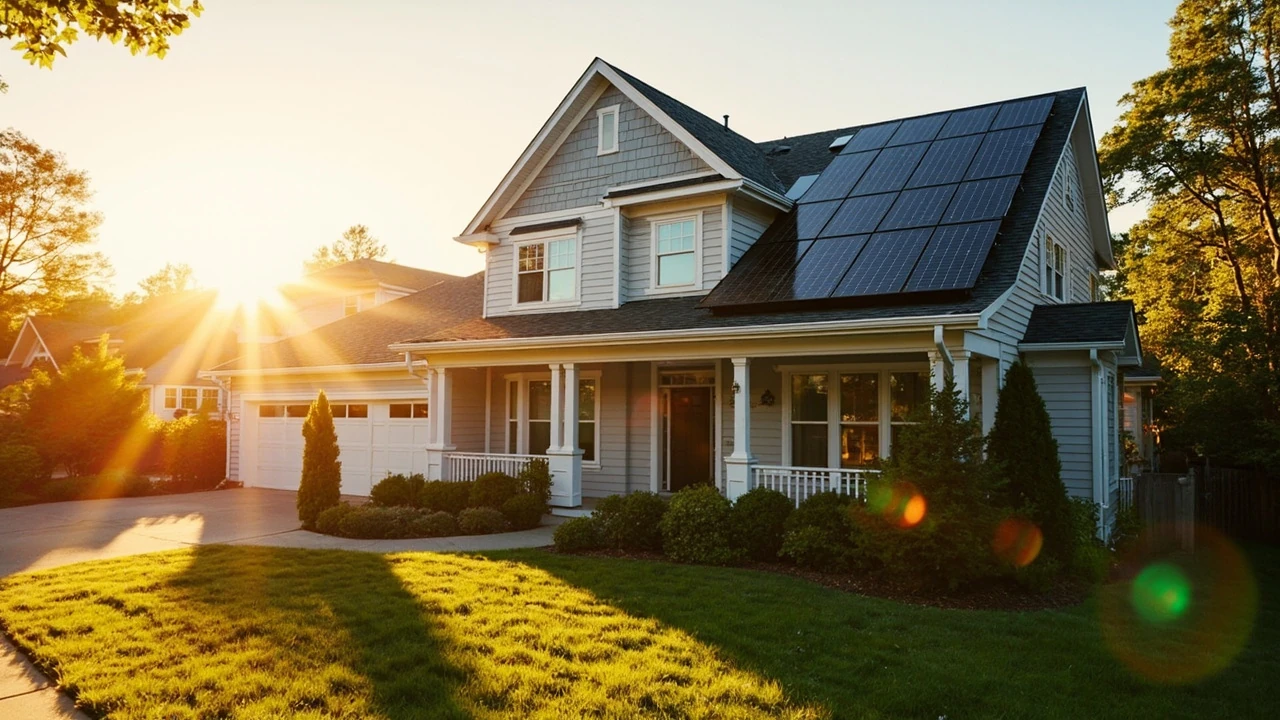
How much do solar panels cost in 2026?
For most US homeowners, a typical rooftop solar installation in 2026 lands somewhere between roughly $18,000 and $28,000 before incentives, which works out to about $2.75 to $4.50 per watt of installed capacity. That range is wide on purpose: the actual number on a homeowner’s quote depends on system size, panel and inverter choice, roof complexity, local labor rates, permitting, and which federal and state tax credits are still available at the time of purchase. The federal residential clean energy credit, for example, has been a major driver of net prices, and its terms are scheduled to change under current law.
This guide walks through the real cost drivers, what an average system looks like by household size, how geography changes the price, and how to read a quote without getting lost in the fine print. It also covers the soft costs that installers sometimes bury in the proposal, from permitting and interconnection fees to racking and roof repairs.
What most homeowners actually pay for rooftop solar
Most US residential solar quotes are priced in dollars per watt, a single number that captures the panels, inverters, racking, labor, permits, and the installer’s overhead. In 2026, the national average is in the neighborhood of $3.00 to $3.50 per watt for a straightforward rooftop system, according to widely cited tracking services, though prices vary meaningfully by state and even by zip code. A 6 kilowatt (kW) system at $3.25 per watt, for example, would carry a gross price around $19,500, while a 10 kW system at the same rate would land closer to $32,500.
The interesting question for most homeowners is not the gross number on the contract. It is the net price after incentives and the long-term electricity savings. Net prices for an average 7 kW system frequently fall into the $15,000 to $22,000 range once the federal credit and any state or utility rebates are applied, but the exact figure depends on policy that can change from one budget cycle to the next.
| System size | Typical US home | Gross price range (before incentives) | Likely net price after typical 2026 incentives |
|---|---|---|---|
| 4 kW | Small home, low usage, mild climate | $11,000 – $18,000 | $8,000 – $13,000 |
| 6 kW | Average 2–3 bedroom home | $16,500 – $27,000 | $12,000 – $20,000 |
| 8 kW | Average 3–4 bedroom home | $22,000 – $36,000 | $16,000 – $26,000 |
| 10 kW | Larger home or high electric use | $27,500 – $45,000 | $20,000 – $33,000 |
| 12 kW+ | Large home, EV charging, future batteries | $33,000 – $54,000+ | $24,000 – $40,000+ |
These figures are illustrative and meant to frame the conversation. Real quotes in a given market may be higher or lower, especially where labor is scarce or where utility incentives are unusually generous.
The main factors that change the price
Two homes with the same square footage can receive quotes that differ by thousands of dollars. The gap comes from a handful of variables that installers weigh on every project.
System size in kilowatts
System size is the single largest driver of the dollar figure on a solar proposal. It is determined by your annual electricity usage, the sun exposure at your site, and the percentage of that usage you want to offset. A home that uses 10,000 kilowatt-hours (kWh) per year in a sunny region may need only 6 kW of panels, while the same home in a cloudy climate might need 8 kW or more to produce the same amount of energy. Larger systems cost more in absolute dollars, but the price per watt often drops slightly because the installer spreads fixed costs like permitting and mobilization across more panels.
Panel type and efficiency
Most residential systems in 2026 still use monocrystalline silicon panels, which offer higher efficiency in a smaller footprint than older polycrystalline designs. Within that category, premium tier-one manufacturers charge more per panel than commodity brands, but the difference per watt is often small once balance-of-system costs are factored in. Thin-film and emerging tandem-cell panels exist but remain a small share of the residential market. Higher-efficiency panels matter most when roof space is limited, because they produce more power per square foot and may allow a smaller array to meet the same energy target.
Inverter choice
The inverter converts the direct current produced by the panels into the alternating current your home uses. There are three common configurations:
- String inverters, where a single inverter handles the output of a series of panels. They are the least expensive option but can suffer when one panel is shaded.
- Microinverters, attached to each panel, which isolate production from each module. They cost more up front but make monitoring and future panel replacement easier.
- Power optimizers paired with a string inverter, which split the difference in price and performance.
Microinverters and optimizers can add several hundred to a few thousand dollars to a system, depending on how many panels are installed.
Roof type, pitch, and complexity
A simple gable roof with a single south-facing slope is the cheapest surface to install on. Add multiple roof faces, dormers, valleys, or a steep pitch and the labor cost climbs. Roof material matters too: composition shingle is the easiest, while tile, slate, and metal often require specialized mounting hardware that can add hundreds to thousands of dollars. If the roof needs replacement before the solar panels are installed, the project cost grows by the cost of a reroof, typically $8,000 to $20,000 for a typical home.
Labor, permitting, and soft costs
Soft costs are the non-hardware pieces of a solar project: customer acquisition, design, engineering, permitting, inspection, and interconnection with the utility. In many US markets, soft costs now rival the cost of the panels themselves, and they are the main reason two houses in different counties can receive very different prices. Permitting fees alone range from a few hundred dollars in some jurisdictions to over a thousand in others. Utility interconnection fees vary as well, and time-of-use rate structures can change the savings math after the system is turned on.
Add-ons: batteries, EV chargers, and monitoring
A growing share of homeowners add a battery to their system to keep the lights on during outages or to use more of their own solar production after sunset. In 2026, a typical 10 kWh home battery can add roughly $10,000 to $15,000 to the project, before incentives. EV chargers, whole-home monitoring, and weather sensors add smaller amounts but should be priced out at quote time rather than as surprises later.
How the federal tax credit works in 2026
The federal residential clean energy credit, established by the Inflation Reduction Act, allows qualifying homeowners to claim a percentage of the cost of a new solar system as a tax credit. Under the law as currently scheduled, the credit is set to step down and ultimately expire for residential systems on a known timeline, which makes timing matter.
Important features of the credit to understand before signing a contract:
- It is a nonrefundable tax credit, meaning it can reduce your federal tax liability to zero but will not generate a refund beyond that.
- Any unused portion can generally be carried forward to future tax years, so a homeowner with low tax liability in the installation year can still benefit.
- It applies to the gross system cost, including labor, mounting hardware, permitting, and certain add-ons like batteries when installed alongside solar.
- The system must be placed in service during the qualifying year, not just purchased, so installation delays can affect eligibility.
For an exact percentage and any 2026-specific guidance, the IRS resource page on the residential clean energy credit and the Department of Energy’s residential solar guidance are the right places to verify current rules before claiming the credit on a return.
State and local incentives that can stack with the federal credit
Many states, utilities, and municipalities offer their own incentives on top of the federal credit. These vary widely and can shift the math in a region very quickly.
| Program type | Typical form | What it does to a quote | Where to verify |
|---|---|---|---|
| State tax credit | Income tax credit (often 10–25% of system cost) | Reduces state tax liability; may carry forward | State department of revenue |
| Property tax exemption | Excludes added home value from property tax | Keeps long-term ownership cost down | County assessor |
| Sales tax exemption | Waives state and local sales tax on equipment | Cuts 0–9% off the gross price | State department of revenue |
| Utility rebate | One-time check or per-watt payment | Direct discount on the contract | Local utility website |
| Performance-based incentive | Per-kWh payment for solar production | Adds to long-term savings | State energy office |
| Low-interest loan | Financing at below-market rates | Lowers monthly payment, not gross price | State green bank or credit union |
The Database of State Incentives for Renewables and Efficiency is a common starting point for cross-checking what is available in a given state, but homeowners should confirm the program is still funded and open to new applicants at the time of their quote.
How geography changes the price per watt
Two homes with identical roofs can receive quotes that differ by more than a dollar per watt purely because of where they sit. A few patterns show up year after year in tracking data.
- California, New York, Massachusetts, and Hawaii often sit on the higher end of the price range, where soft costs, labor rates, and complex permitting push prices above the national average.
- Texas, Florida, Arizona, and the Southeast often sit in the middle of the range, where competition among installers and simpler permitting help hold prices down.
- Rural and midwestern markets sometimes post the lowest per-watt prices, though fewer installers may be available and travel surcharges can creep in.
Within a state, the same trends appear at the city and county level. Dense urban permitting offices can take longer and charge more than suburban or rural ones, and labor markets around major metros tend to be tighter.
Reading a solar quote without getting lost
For additional context, Most residential solar quotes look more alike than different on the surface, but the differences between a fair deal and a poor one tend to be in the details. A homeowner who knows what to look for is in a much stronger position to compare.
Key line items to ask about on every quote:
- Total system size in kilowatts and the assumed production in kilowatt-hours per year
- Number of panels, panel manufacturer and model, and panel wattage
- Inverter type, manufacturer, and warranty terms
- Racking, attachment method, and any roof warranty implications
- Itemized soft costs: permitting, interconnection, design, and customer acquisition
- Add-ons: battery, EV charger, monitoring, critter guard, and any roof repair allowance
- Warranty length for equipment, workmanship, and production guarantees
- Escalator clauses, completion milestones, and any cancellation or transfer fees
A common trap is the teaser price shown in a first phone call, which often assumes the smallest system size, the most generous incentives, and a perfectly straightforward roof. The real proposal, after a site visit, is the number to compare across installers.
Financing options and what they mean for the bottom line
How a homeowner pays for solar changes the math almost as much as the gross price. Each common path has tradeoffs.
- Cash purchase delivers the highest long-term return because the homeowner owns the system outright and gets every dollar of electricity savings and incentives.
- Solar loans let a homeowner spread the cost over 10 to 25 years. Monthly payments are usually designed to be similar to or lower than the displaced electric bill, but interest reduces the net return.
- Power purchase agreements (PPAs) and solar leases let a homeowner host a system owned by a third party, paying a fixed per-kWh rate or a fixed monthly fee. The barrier to entry is low, but the homeowner does not own the system and may not receive the federal tax credit.
- Home equity products, such as a HELOC or a cash-out refinance, can offer lower interest rates than a solar-specific loan, though they put the home itself at risk if payments become difficult.
For most homeowners, a cash purchase maximizes lifetime savings, but a well-priced loan can still deliver a positive return and is sometimes the more realistic option.
When solar stops making economic sense
Solar is not a universal win. A few situations tend to make the payback stretch much longer than average or even push it past the life of the panels.
- Very low electricity usage. A home that only uses 4,000 kWh a year does not have enough bill to replace, so even a small system will take a long time to pay off.
- Heavy shading. Roofs shaded by tall trees, neighboring buildings, or chimneys for much of the day will produce far less than the same system in full sun.
- Old or damaged roofs. Installing on a roof that will need replacement within five years can double the project’s cost if the panels have to be removed and reinstalled later.
- Rental homes or short timelines. Owners who plan to move within a few years may not capture enough savings, and the marketing value of a leased system is often less than the cost paid in.
- Poor local policy. In areas with unfavorable net metering, low retail rates, or high property taxes on solar, the math can turn negative even with a good system.
A simple payback calculation, dividing the net system cost by the first-year savings, gives a rough idea. Anything beyond about 12 to 15 years suggests the project may not be worth the upfront spend at current prices, though rising electric rates can shift that figure over time.
The role of the inverter in long-term cost
The inverter is the part of a solar system most likely to need replacement before the panels do. String inverters typically carry 10 to 12 year warranties, while microinverters and optimizers usually come with 25 year coverage. The replacement cost of a string inverter in 2026 is often in the $1,500 to $3,000 range, including labor, which is a meaningful slice of the system’s value over its life. When comparing quotes, it helps to ask how the inverter is warranted, who performs warranty service, and what the labor cost is if it fails outside warranty.
Battery storage as a separate decision
Batteries and solar are often sold together, but they are economically separate. A battery’s payback is driven mostly by time-of-use rates, outage protection, and local incentives, not by the solar panels themselves. In regions with high outage risk, expensive peak rates, or generous storage rebates, a battery can pencil out. In regions with flat rates and few outages, the battery mostly adds cost. As a rough rule, batteries in 2026 are still a more expensive way to save a kilowatt-hour than the panels are, so they are usually a second-purchase decision rather than a first one.
What a typical installation timeline looks like
From signed contract to a working system usually takes 6 to 16 weeks, depending on local permitting and utility queues. The breakdown is roughly:
- Site survey and engineering, often 1 to 3 weeks after signing
- Permit submission and approval, 1 to 6 weeks depending on the jurisdiction
- Equipment delivery and installation, often a single workday for residential systems, but a few days for larger or more complex projects
- Inspection by the local authority having jurisdiction, 1 to 4 weeks
- Utility approval and permission to operate, 2 to 8 weeks in many markets
Delays at the inspection and interconnection steps are the most common sources of frustration, and they tend to be outside the installer’s direct control. Homeowners can speed the process by responding quickly to utility paperwork and making sure roof and electrical work is complete before the install crew arrives.
How to compare installers fairly
Solar markets reward comparison shopping, but only if the comparison is apples to apples. A few questions help level the playing field.
- Will the system be the same size, panel model, and inverter across all quotes?
- Are the assumed production and shading losses realistic for the site?
- Are warranties, monitoring, and workmanship the same on every contract?
- Are financing terms, escalators, and assumptions about incentives identical?
Reputable installers will produce a proposal that lines up with these inputs, while less rigorous ones may paper over a small system with optimistic production numbers to make the payback look better than it really is. The [Wikipedia overview of solar panels](https://en.wikipedia.org/wiki/Solar_panel) is a useful sanity check on basic technology and history before sitting down with a salesperson.
Long-term value and resale considerations
Owned solar systems often increase a home’s resale value, though the exact premium depends on whether the system is owned outright, financed, or leased, and on local market attitudes. Owned systems that transfer with the home and carry a long production warranty are typically the easiest to value. Leased systems can complicate a sale, because the new owner must take over the contract or pay to remove the panels. If resale is likely within a decade, a straightforward cash or loan purchase with clear documentation tends to hold its value best.
A simple pre-quote checklist
Before inviting installers to the home, a short list of preparation steps can save time and improve the accuracy of every quote received.
- Pull the last 12 months of electric bills to capture real usage
- Check the roof age and condition, including underlayment and any known leaks
- Confirm the home’s average sun exposure and any planned tree work
- Review HOA rules, historical district rules, and any architectural restrictions
- Decide whether a battery is on the table for the initial project or a future add-on
- Check the current state of federal, state, and utility incentives with authoritative sources
The [Department of Energy’s residential solar consumer guide](https://www.energy.gov/energysaver/residential-solar-consumer-guide) is a useful starting point for verifying the policy landscape and understanding the options before signing anything.
Frequently asked questions
How much do solar panels cost for a typical 2,000 square foot home?
For a 2,000 square foot home with average electricity use, a typical system in 2026 is in the 6 to 8 kW range. The gross price usually falls between $18,000 and $30,000 before incentives, and the net price after the federal tax credit and any state or utility programs often lands between $13,000 and $22,000. Actual numbers depend on the roof, the local market, and which incentives are still available at the time of purchase.
How much do solar panels cost per panel?
Individual residential panels in 2026 typically cost $200 to $400 each at the wholesale level, but that is not what homeowners pay. Once racking, inverters, labor, permitting, and overhead are included, the all-in price per panel usually runs $700 to $1,200. The number is more useful as a sanity check than as a basis for comparison, because per-watt pricing captures the project more accurately.
How much do solar panels cost after the federal tax credit?
For a system installed in 2026, the federal residential clean energy credit is set to step down under current law, so the post-credit price depends on when the system is placed in service. The IRS pages on the credit are the right place to confirm the current percentage before claiming it. State and utility programs can stack on top of the federal credit, sometimes lowering the net price by another 10 to 30 percent.
Do solar panels increase property taxes?
Many states have property tax exemptions for residential solar that exclude the added home value from the assessment. In states without an exemption, the assessed value may rise slightly. Homeowners should check their state’s rules with the local assessor, since the impact on annual property tax bills can range from zero to a few hundred dollars.
How long does it take for solar panels to pay for themselves?
For a typical owned system with a 25 year warranty, the simple payback in 2026 is usually in the 7 to 12 year range, depending on local electricity rates and incentives. A battery or EV charger added to the system stretches that timeline because the battery costs more than the savings it generates in the first decade.
Are there financing options that do not require a down payment?
Yes, many solar loans are structured with no money down, and PPAs and leases have no upfront cost at all. The trade-off is that the installer or financier owns the system or has a lien on the home, which reduces the long-term return and can complicate a future sale. Homeowners should compare the 25 year cost of each option rather than the monthly payment alone.
Do solar panels work during a power outage?
Standard grid-tied solar systems shut off during an outage for safety, so they do not power the home by themselves. A battery, either AC-coupled or DC-coupled, is required for backup power. Some homeowners add a small critical loads panel at the same time to keep essential circuits running without overbuilding the battery.
How much do solar panels cost on a metal or tile roof?
Metal and tile roofs are perfectly compatible with solar but require specialized mounting hardware and often more labor, which adds to the cost. A typical premium for tile is in the $1,000 to $3,000 range, while standing seam metal can sometimes be cheaper because the panels clamp directly to the seams without any roof penetrations. Local installer experience with the specific roof material is the main factor in keeping the premium reasonable.
What happens to solar panels at the end of their life?
Most panels installed today come with 25 to 30 year power warranties, after which production typically falls to about 80 to 85 percent of the original nameplate. Recycling programs exist in several states, and the panel materials, especially aluminum frames, glass, and silicon, are largely recoverable. The cost of removal and recycling is usually modest and is rarely a reason to skip solar in the first place.
How much do solar panels cost if I add a battery later?
Adding a battery after the solar system is installed is possible, but the cost is often slightly higher because the installer must come back for a separate project and may need to add extra hardware like a battery-based inverter or a critical loads panel. Planning for the battery during the original design, even if it is not purchased until year two or three, keeps the options open without committing upfront. For a deeper look at the technology and how a complete system fits together, the [Wikipedia article on solar panels](https://en.wikipedia.org/wiki/Solar_panel) covers the underlying mechanics.
Leave a Reply