
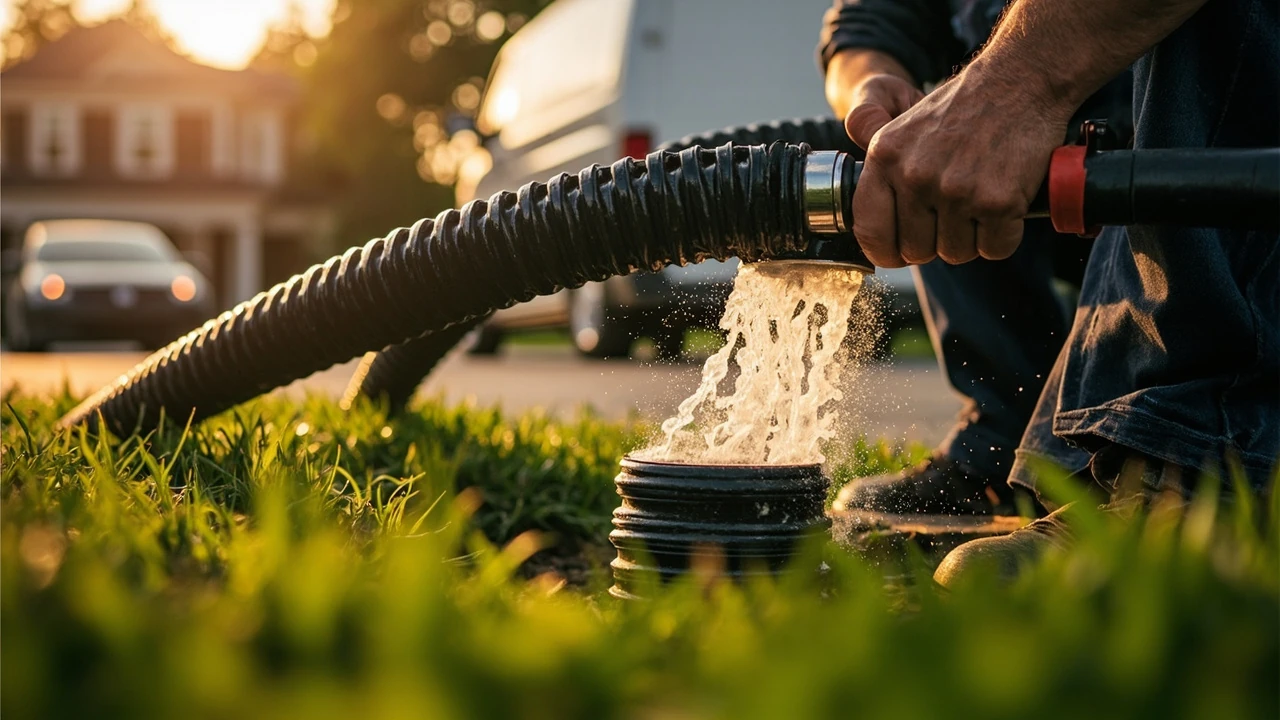
Hydro jetting sewer line: what it is and when it makes sense
A slow floor drain in the basement, a kitchen sink that gurgles when the washing machine empties, and a faint sewage smell near the cleanout are usually the first hints that a main sewer line is struggling. By the time wastewater backs up into a tub, the restriction has often been building for months. A hydro jetting sewer line service is one of the more thorough ways a plumber can clear that restriction, but it is not the right answer for every pipe or every blockage.
This guide explains how hydro jetting works on a main sewer line, when it is the right tool, when a different method is safer, what the job typically costs, and how to decide whether the plumber at your door is approaching the problem the right way. The goal is to help you ask better questions and avoid paying for a service that does not match the problem you actually have.
How a hydro jetting sewer line service actually works
Hydro jetting uses a high-pressure water stream delivered through a specialized hose and nozzle to scrub the inside of a pipe. The nozzle is engineered so that water sprays both forward to break up the obstruction and backward at an angle to drive the hose forward and push debris toward the downstream access point. The pressure, gallons per minute, and nozzle type are chosen based on the pipe material, diameter, and the nature of the buildup.
On a residential main sewer line, a typical setup includes a water tank or a feed from a hydrant, a high-pressure pump, a long hose reel, and a selection of nozzles for grease, roots, and general scaling. The technician usually enters the line through an existing cleanout, a pulled toilet, or a roof vent, depending on the layout of the home.
Three details separate a hydro jetting job from a simple drain clearing:
- Full-circumference cleaning. Snakes and small augers typically punch a hole through the obstruction. Jetting scours the entire inner wall of the pipe, which slows the return of buildup.
- Calibrated pressure. Operators adjust pressure for cast iron, clay, PVC, or orangeburg pipe. Too much pressure in a weak or aging line can worsen existing damage.
- Pre- and post-inspection. Responsible contractors run a sewer camera before jetting to confirm the line can take the pressure, and again after to confirm the line is clear and structurally sound.
When hydro jetting is the right call
Hydro jetting is well suited to a specific set of problems. It is rarely a first response for a single slow fixture.
| Situation | Why jetting often fits | Typical alternative |
|---|---|---|
| Recurring main line backups every few months | Removes the residue that causes clogs to reform | Snaking for short-term relief |
| Heavy grease buildup from kitchen lines | Hot water and pressure emulsify and flush grease | Enzyme treatment as maintenance |
| Small to moderate root intrusion in older clay lines | Cuts fine roots and flushes them out | Root saw or spot repair for severe cases |
| Scale and mineral deposits in cast iron | Scales off tuberculation that catches debris | Descaling chains for very heavy scale |
| Pre-lining cleaning before trenchless rehab | Provides a clean surface for the liner to bond to | Mechanical cleaning for fragile pipes |
Jetting is usually a poor fit when the pipe is already collapsed, severely offset at a joint, or made of a material that cannot handle the pressure. A camera inspection should happen before any jetting decision, not after the work is done.
When hydro jetting is the wrong tool
High-pressure water is powerful, and powerful tools in the wrong hands, or in the wrong pipe, create expensive problems. A careful contractor will refuse to jet a line under several conditions.
- Suspected collapse or major offset. Pressurizing a broken section can flood the surrounding soil or push debris into a void.
- Orangeburg or other deteriorating pipe. This bituminous fiber pipe deforms under pressure and can crush if jetted aggressively.
- Poorly supported or back-pitched runs. Water under pressure can pool where the pipe belly already holds water, sometimes surfacing in the yard.
- Unverified material or condition. If the contractor cannot confirm pipe type and structural state, jetting blind is a gamble.
Any plumber who proposes to jet a line without first inspecting it is taking a shortcut. A short camera pass is the cheapest insurance on the job.
What a hydro jetting sewer line job looks like, step by step
Most residential jobs follow a similar rhythm. The exact order can vary, but the underlying steps rarely do.
- Locate the cleanout. The technician finds the main line access point, usually a capped PVC fitting outside the home or in the basement.
- Run a camera inspection. A small camera is pushed through the line to identify the cause of the blockage, the pipe material, and any structural issues.
- Choose the nozzle and pressure. Grease nozzles, root cutters, and general-purpose nozzles behave differently. Pressure is set to match the pipe.
- Jet the line. The hose is worked through the line in passes, starting downstream and pulling back toward the access point.
- Re-inspect with the camera. The technician confirms the line is clear and checks for any new damage revealed by the cleaning.
- Document and recommend. A reputable contractor records the before-and-after video and explains any follow-up work, such as a spot repair or a maintenance plan.
For a typical single-family home, the on-site work often takes one to three hours, with larger or more complex lines taking longer.
How much hydro jetting sewer line service costs
Pricing varies by region, line length, severity, and whether camera work is bundled in. The numbers below reflect commonly cited residential ranges and are intended to help you evaluate a quote, not as a guaranteed price in your area.
| Service component | Typical residential range | What affects the price |
|---|---|---|
| Hydro jetting of main sewer line | $350 to $900 | Line length, severity, access, regional labor rates |
| Camera inspection (often bundled) | $100 to $400 | Standalone vs. bundled with jetting |
| Emergency or after-hours calls | Adds $100 to $300+ | Time of day, weekend, holiday |
| Multiple cleanouts or roof entry | Adds $75 to $200 | Accessibility, safety setup |
| Root treatment or deterrent application | Adds $50 to $200 | Type of product and line length |
Ask whether the quote is flat-rate or hourly, whether camera work is included, and what happens if the line cannot be cleared. A written scope of work protects both sides.
Hydro jetting versus other clearing methods
No single method is best for every situation. The right choice depends on the pipe, the blockage, and the long-term plan for the line.
| Method | Best for | Limits | Typical cost |
|---|---|---|---|
| Plunger or hand snake | Single fixture, soft clog near the drain | Cannot reach main line or heavy buildup | $0 to $30 (tool cost) |
| Motorized drain auger (drain machine) | Main line clogs, some root mass | Punches through clog rather than cleaning walls | $150 to $500 service call |
| Hydro jetting | Grease, scale, recurring buildup, light roots | Not suitable for collapsed or very fragile pipe | $350 to $900 residential |
| Trenchless lining or pipe bursting | Damaged pipe needing structural repair | Requires pre-cleaning and structural assessment | $80 to $250 per foot |
| Collapsed, severely offset, or undersized lines | Disruptive to yard, driveway, or slab | $3,000 to $25,000+ |
For many homes, the choice is not between jetting and replacement but between jetting and a less thorough cleaning. Jetting tends to last longer between service calls because it removes the residue that catches new debris.
What to check before hiring a hydro jetting contractor
Hydro jetting equipment is specialized, and not every company that owns a jetter uses it well. A short conversation before the work begins reveals most of what you need to know.
- Ask about the camera step. A contractor who plans to jet without inspecting first is cutting a corner. The inspection should happen before any work, not after.
- Ask about pressure range and pipe type. A knowledgeable technician can explain how pressure is set for your pipe material and why a particular nozzle was chosen.
- Ask for before-and-after video. Good contractors document the work and share the file with you. This protects you if there is a question about pre-existing damage.
- Ask about insurance and licensing. Sewer work can damage property. Make sure the company carries general liability and, where required, holds a plumbing license.
- Ask about warranties. Many companies offer a 30 to 90 day warranty on a main line clearing. Understand the conditions, especially what counts as a new clog versus a recurring one.
Homeowners searching for a hydro jetting sewer line service often benefit from a quick look at the contractor’s own published guidance, since the same companies explain in writing how they approach the work. For a practical look at what a hydro jetting contractor is willing to handle and what they recommend leaving to a professional, this overview of DIY versus professional hydro jetting lays out the equipment, pressure, and risk profile in clear terms.
Risks and how responsible contractors manage them
Hydro jetting is safe in trained hands, but it is not risk-free. Knowing the failure modes helps you evaluate the work being done in your home.
- Pipe damage. Older cast iron, clay, or orangeburg lines can fail under high pressure. Pre-inspection and pressure selection reduce this risk.
- Water damage. A blocked line can back up during jetting if downstream flow is restricted. Operators manage this by controlling flow rate and watching for surcharging.
- Cleanout or joint failure. Weak fittings can blow out under pressure. Inspecting and, if needed, upgrading the cleanout before jetting prevents messy surprises.
- Cross-contamination. Sewage contains bacteria. Proper PPE and cleanup protect both the technician and the homeowner.
If the contractor arrives, looks at the line briefly, and starts jetting without a camera, that is a meaningful warning sign. The safest jobs are also the most methodical ones.
How often a sewer line needs hydro jetting
There is no universal schedule. Jetting frequency depends on the pipe, the household, and the surrounding trees.
- Older clay lines with root intrusion: Every 12 to 24 months is common, sometimes paired with a root-inhibiting foaming treatment.
- Cast iron with scale buildup: Every 2 to 5 years, or as symptoms return.
- PVC lines with grease risk: Every 2 to 4 years for homes that cook heavily and use a garbage disposal.
- Newer PVC with no history of issues: Jetting is rarely needed unless a specific event, such as a construction debris flush, causes a problem.
A short maintenance plan with your plumbing company is often cheaper than repeated emergency calls. Many homeowners combine an annual camera check with jetting only when the video shows buildup returning.
How a sewer camera inspection changes the decision
The camera is the difference between guessing and knowing. A 20-minute inspection tells you the pipe material, the location of the problem, the depth of any bellies, and whether hydro jetting will actually help. Without that information, you are paying for a service that may not match the failure mode.
Common findings and what they mean:
| Camera finding | Likely next step |
|---|---|
| Grease ring with otherwise intact pipe | Hydro jetting is appropriate |
| Fine root intrusion at a single joint | Hydro jetting plus root treatment, plan for spot repair |
| Heavy scale with reduced diameter | Jetting or descaling, possibly followed by lining |
| Visible offset or belly holding water | Jetting may help short-term, but replacement is the long-term fix |
| Collapse or major fracture | Jetting is not appropriate; excavation or trenchless rehab is needed |
For broader context on how the main line ties into the rest of a home’s plumbing and maintenance, a general overview of residential plumbing systems on Wikipedia’s plumbing overview provides a useful background read.
Preparing your home for a hydro jetting visit
A little preparation makes the appointment faster and cleaner.
- Clear access to the cleanout. Move storage, plants, or debris away from the cap so the technician can work quickly.
- Avoid running water right before the visit. A line that is already holding water is harder to inspect and jet.
- Keep pets and children away from the work area. Equipment and hoses create trip hazards, and the cleanout area can get wet.
- Note fixture behavior. Jot down which drains are slow and which gurgle. This information helps the technician pinpoint the problem area.
Small steps like these shorten the visit, which can lower the labor portion of the bill if the company bills hourly.
Questions to ask after the work is done
A good contractor leaves you with answers, not just a clear drain. Before the team packs up, consider asking:
- What did the camera show before and after the jetting?
- What pipe material do I have, and what is its condition?
- Are there any spots that look like they will fail in the next few years?
- What is the recommended maintenance interval for this line?
- Is there a warranty on this clearing, and what does it cover?
Written answers, even a quick email summary, are useful when you sell the home or hand the maintenance plan to a new tenant.
Frequently asked questions
What is hydro jetting for a sewer line?
Hydro jetting is a drain cleaning method that uses a high-pressure water stream, typically 1,500 to 4,000 PSI on residential lines, delivered through a specialized hose and nozzle to scour the inside of a sewer pipe. Unlike a snake that punches a hole through a clog, jetting cleans the full inner circumference of the pipe, which slows the return of buildup.
How do I know if my sewer line needs hydro jetting?
Recurring main line backups, multiple slow drains at once, or a history of grease or root problems usually point to a line that benefits from jetting. A sewer camera inspection is the only reliable way to confirm that the pipe material and condition can handle the pressure before scheduling the work.
Is hydro jetting safe for old pipes?
It can be, but only after inspection. Old cast iron, clay, and especially orangeburg pipe can be fragile. A responsible plumber will set the pressure based on the pipe material, use a conservative nozzle, and stop immediately if the camera shows a weak section. Jetting blind on an aging line is one of the more common causes of avoidable damage.
How long does a hydro jetting sewer line service take?
Most residential jobs take one to three hours on site, including camera work before and after. Longer or more complex lines, especially those with multiple branches or difficult access, can take longer. The technician should give you a realistic window before the work begins.
What does hydro jetting cost for a residential sewer line?
Residential hydro jetting commonly falls between $350 and $900, with camera inspection often bundled. Emergency calls, multiple access points, and additional services such as root treatment add to the total. Always ask whether the quote is flat-rate and what is included.
Can I do hydro jetting myself?
It is not recommended. Consumer-grade pressure washers are not designed for sewer work, and rental jetters still require training to use safely. A mistake can crack a pipe, cause a backup, or expose you to raw sewage. The cost of a professional service is often lower than the cost of a single DIY mistake, especially when you factor in equipment rental, protective gear, and your own time.
How often should I have my sewer line jetted?
There is no fixed schedule. Older clay lines with root intrusion often need jetting every one to two years. PVC lines with no history of problems may go many years between cleanings. A periodic camera check is the most reliable way to decide, since it shows when buildup is starting to reform.
What is the difference between hydro jetting and snaking?
Snaking uses a rotating cable to break through or pull out a clog, leaving most of the pipe wall untouched. Hydro jetting uses pressurized water to clean the entire inner surface of the pipe. Jetting tends to last longer between service calls, but it also costs more and requires a more careful assessment of the pipe.
Will hydro jetting remove tree roots?
Hydro jetting can cut and flush out fine to moderate root intrusion, especially when paired with a root-cutting nozzle. It is not a permanent solution if the roots are entering through a cracked joint, because they will grow back. In that case, jetting is a short-term fix and a spot repair or lining is the long-term answer.
What should I do if my sewer line backs up again after jetting?
Call the contractor who did the work first, especially if the job is still under warranty. A quick re-inspection with the camera usually reveals whether the backup is a new clog, a recurrence of the original problem, or a sign of a structural issue that jetting cannot fix. Document the date, time, and which fixtures were affected so the technician has clear information to work from.
Leave a Reply