Roof cleaning cost: what homeowners actually pay
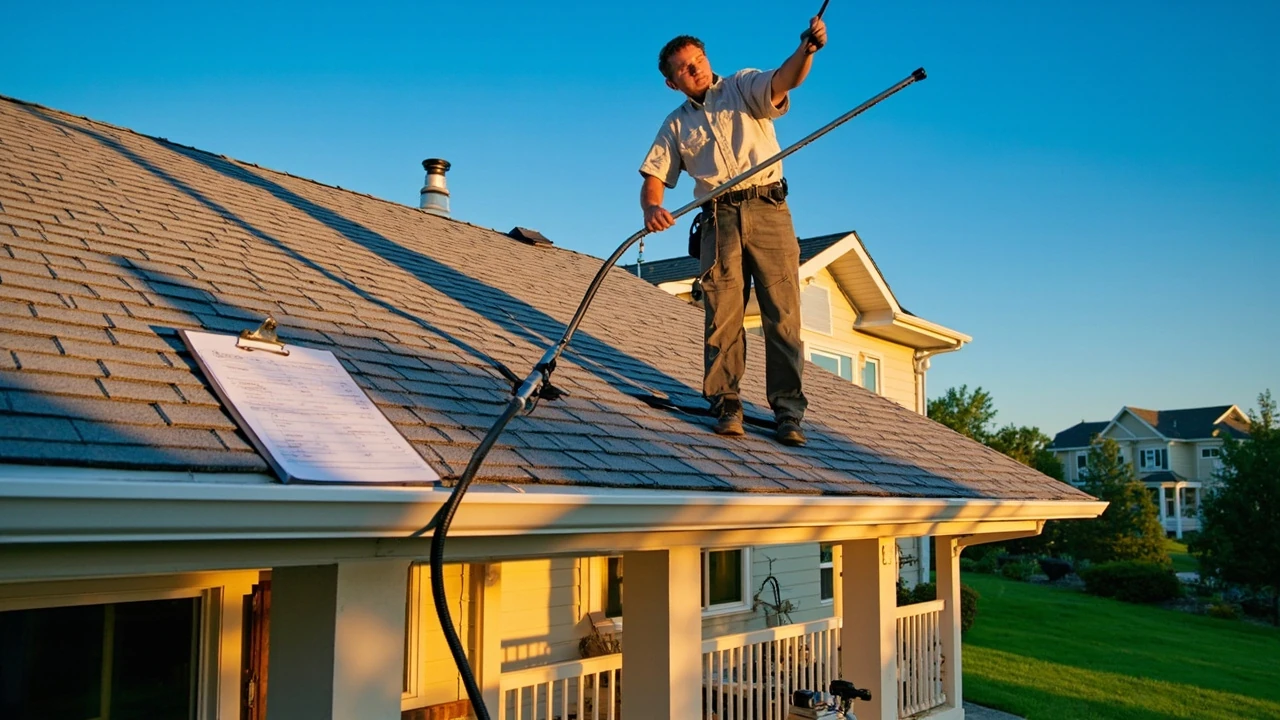
A typical roof cleaning cost for a single-family home in the United States runs between $0.20 and $0.70 per square foot, which means most homeowners land somewhere between $300 and $1,100 for a full job. The exact figure shifts with roof size, pitch, material, the cleaning method used, and how much biological growth has built up since the last wash. A small ranch home with light algae streaks can come in well under $400, while a steep two-story roof caked with moss can push past $1,500 once labor, chemistry, and safety setup are added in.
Understanding those variables matters because roof cleaning is one of those maintenance tasks that looks optional until algae streaks start pulling eye level downward, moss lifts a shingle edge, or a home inspector flags dark staining before a sale. The goal of this guide is to give a working budget before you call a contractor, explain the line items that move a quote up or down, and walk through the choices that protect the roof while still getting it clean.
What roof cleaning cost usually includes
Most residential roof cleaning quotes bundle four cost drivers into a single number. Knowing what is inside that number helps you compare one bid to the next without getting distracted by differences in wording.
- Labor for the cleaning crew, which scales with square footage, pitch, and access difficulty
- Cleaning solution, typically a sodium hypochlorite and surfactant mix for soft washing, or a biodegradable detergent for gentle rinse jobs
- Setup and safety equipment, including extension ladders, harnesses, hose runs, and pump gear
- Travel and minimum-job fees, which are common in rural and suburban markets
What is usually not included is any repair work. If a technician spots cracked flashing, lifted shingles, or rusted vent boots during the wash, that is a separate line item. Good contractors will photograph the issue and quote the repair before doing it rather than rolling it into the cleaning price.
Average price ranges by roof size
Square footage is the single biggest lever in a roof cleaning estimate. The table below translates the per-square-foot pricing into realistic totals for common home sizes. The ranges assume a standard asphalt shingle roof with moderate algae growth and easy ground access.
| Home size | Roof square footage | Low estimate | Mid estimate | High estimate |
|---|---|---|---|---|
| Small ranch or cottage | 1,000 – 1,500 sq ft | $200 | $450 | $750 |
| Average single-story | 1,500 – 2,000 sq ft | $300 | $600 | $1,000 |
| Two-story colonial | 2,000 – 2,500 sq ft | $400 | $800 | $1,300 |
| Large two-story or steep design | 2,500 – 3,500 sq ft | $500 | $1,100 | $1,800 |
| Estate or multi-gable | 3,500+ sq ft | $700 | $1,500 | $2,500+ |
These are planning numbers, not quotes. A real estimate should always come from a contractor who has measured the roof, checked the material, and looked at access from the driveway or yard.
How cleaning method changes the price
Method matters as much as size. The wrong approach can shorten the life of a roof, so the cheapest bid is not always the best value. The two methods most homeowners will be quoted are soft washing and pressure washing, with manual moss removal sometimes added for heavy growth.
Soft washing
Soft washing is the default for asphalt shingles, tile, and most residential roofs. A low-pressure pump applies a diluted sodium hypochlorite solution that kills algae, lichen, and moss at the root. The crew then rinses gently or lets the rain finish the job over the next few weeks. Because the work is mostly chemical and not scrubbing, labor stays modest and the risk of surface damage is low. Soft washing typically falls in the middle of the price range shown above.
Pressure washing
Pressure washing uses high-velocity water to blast growth off the surface. It is faster on metal and some concrete tile roofs, but it can strip granules from asphalt shingles and force water under laps. The cost per square foot is often similar to soft washing, but warranty and repair risk is higher, which is why most shingle manufacturers and the roof cleaning practices outlined in industry guidance steer homeowners toward soft systems for asphalt.
Manual moss removal
For roofs with thick, established moss, a third step is sometimes added. Crews scrape or brush the moss off by hand, bag the debris, and then apply the soft wash to kill what is left in the shoule layer. This adds labor hours and can lift the total roof cleaning cost by 20 to 40 percent, but it is the safest way to handle growth that has been ignored for years.
Cost by roof material
Material drives both the method and the chemistry, which is why two roofs of the same size can produce different quotes. The table below summarizes what most contractors will charge, assuming moderate biological growth.
| Roof material | Recommended method | Typical cost per sq ft | Why it differs |
|---|---|---|---|
| Asphalt shingles | Soft wash | $0.20 – $0.60 | Common, fast setup, gentle chemistry |
| Architectural or dimensional shingles | Soft wash | $0.25 – $0.70 | Thicker shingle, more chemical dwell time |
| Clay or concrete tile | Soft wash, low-pressure rinse | $0.30 – $0.80 | Walking risk adds labor and breakage buffer |
| Metal (standing seam or panel) | Soft wash or gentle pressure | $0.20 – $0.55 | Smooth surface, faster rinse |
| Slate | Soft wash, manual detail | $0.50 – $1.20 | Fragile material, specialist handling |
| Wood shake | Low-pressure wash, mild detergent | $0.40 – $0.90 | Cannot use strong bleach without damaging fibers |
If your roof is slate, tile, or specialty metal, expect the bid to be at the higher end of each range, and ask the contractor specifically whether they have worked on that material before. Slipping on tile or breaking a slate piece is the kind of mistake that turns a cleaning job into a repair invoice.
What pushes roof cleaning cost up or down
Beyond size and material, several on-site conditions shift the quote. Going through them with a contractor is the fastest way to understand why your number is different from your neighbor’s.
- Pitch and height. A steep roof or a two- or three-story elevation requires harness work, longer ladders, and slower movement, which adds labor hours.
- Growth severity. Light algae streaking is a one-pass job. Heavy moss, lichen, or leaf staining can require multiple applications or hand removal.
- Access. Fenced yards, narrow side yards, detached garages, and landscaping close to the eaves can slow setup and increase hose runs.
- Water source. Most crews need a spigot within reach. Long hose runs or the need to bring a buffer tank can add a small surcharge.
- Local market. Labor rates and minimum service fees vary by region. Coastal and high-cost metros tend to sit at the top of the range, while rural areas can sit lower.
- Add-on services. Gutter clearing, gutter whitening, and driveway rinse are commonly bundled, and they shift the total even though they are not strictly part of roof cleaning.
Two of those items, pitch and growth severity, often do more to move the price than any other. A simple ranch with light algae can sometimes be washed in under two hours, while a steep two-story with thick moss can be an all-day job for a three-person crew.
Soft wash versus pressure wash: a side-by-side comparison
Because the method choice affects both price and risk, it is worth comparing the two approaches on the points that matter to a homeowner.
| Factor | Soft wash | Pressure wash |
|---|---|---|
| Typical cost per sq ft | $0.20 – $0.70 | $0.20 – $0.60 |
| Best for | Asphalt, tile, slate, metal, wood | Metal, concrete tile, some composite |
| Risk to shingles | Low when chemistry is correct | Moderate to high if pressure is too high |
| Kill effect on algae and moss | Strong, keeps working for weeks | Surface-only, faster regrowth |
| Time on site | 2 – 5 hours for most homes | 1 – 3 hours for most homes |
| Landscaping protection needed | Yes, pre-wet and rinse plants | Yes, manage runoff and overspray |
| Warranty impact | Usually compliant with shingle makers | Can void some asphalt warranties |
For most homeowners, the comparison lands on soft washing. Pressure washing has its place on durable materials, but on asphalt it is the option most likely to shorten roof life and trigger an expensive repair later.
How often a roof needs cleaning
Cleaning is not an annual chore for most homes. The biological growth that drives a wash tends to follow a multi-year cycle, especially in humid climates where algae, moss, and lichen thrive. A practical cadence looks like this:
- Light algae on shaded slopes: every 3 to 5 years
- Moderate algae across most of the roof: every 2 to 4 years
- Heavy moss or lichen under tree cover: every 1 to 2 years, often with touch-up between full washes
- Copper or zinc strips installed near the ridge: every 4 to 7 years, since the metal ions slow regrowth
Spreading the cost over those cycles gives a more honest annual budget. A $700 wash done every four years is roughly $175 per year, which is a useful number when comparing roof maintenance to other line items in a home budget.
What a professional roof cleaning visit looks like
Knowing the steps of a real job makes it easier to judge whether the work matched the invoice. A standard soft wash visit follows a predictable order.
- Walk-around and photos. The crew documents existing damage, gutter condition, and landscaping before any water touches the roof.
- Pre-wet plants and grass. Landscaping is soaked with fresh water to dilute any chemical overspray that drifts down.
- Apply the cleaning solution. A low-pressure pump sprays a sodium hypochlorite and surfactant mix from the bottom up so streaking is controlled.
- Dwell time. The solution sits for 10 to 30 minutes, killing algae, moss, and lichen at the root.
- Rinse and detail. Loose debris is gently rinsed, gutters are checked, and any stubborn patches get a second application.
- Final rinse of plants and walk-through. Landscaping is rinsed again, and the crew shows the homeowner before and after photos.
A pressure wash visit swaps the chemical dwell step for a high-velocity rinse, but everything else stays the same. If your visit does not include the pre-wet and final plant rinse, that is a flag worth raising before the next service.
DIY versus hiring a roof cleaning company
Some homeowners consider doing the work themselves with a garden pump sprayer and a hardware store cleaner. The math is interesting but the trade-offs are real, and they are worth weighing carefully.
- Equipment cost. A consumer-grade pump sprayer runs $50 to $150. A proper soft wash pump with hose and nozzle starts around $400 to $800 new.
- Chemical cost. A gallon of 12.5 percent sodium hypochlorite is roughly $25 and can treat a typical roof. Surfactant adds another $20 to $40.
- Safety risk. Falls from a roof or ladder are the leading cause of serious injury in home maintenance. Most homeowners are not set up with harness anchors, extension ladders, and a second person on the ground.
- Warranty risk. Mis-mixed chemicals, high pressure, or foot traffic in the wrong spot can damage shingles and void a manufacturer warranty in a way that is hard to reverse.
- Time. A homeowner with no crew can spend a full day on a job that a two-person team finishes in two to four hours.
For a single-story ranch with a low pitch, a careful homeowner with the right sprayer can do the job. For a two-story home, a steep pitch, or a fragile material, the professional route is usually the safer and more cost-effective choice over the life of the roof.
How to get a roof cleaning quote you can trust
Two or three written bids are the best way to compare roof cleaning cost in any market. A few habits make those bids much more useful.
- Ask for the cost per square foot, the total square footage they are pricing, and the cleaning method they plan to use.
- Confirm whether the bid includes gutter clearing, plant protection, and a follow-up rinse if growth is still visible after a few weeks.
- Request proof of insurance, including general liability and worker coverage for ladder and roof work.
- Ask which cleaning solution they use and at what dilution, especially if you have landscaping that is sensitive to chlorine.
- Get the warranty in writing. A one- to three-year no-regrowth warranty is common in the soft wash industry.
For deeper context on the factors that shape these estimates, the This Old House roof cleaning cost guide walks through the same variables in a homeowner-friendly format and is a useful second opinion when you are weighing bids.
While you are comparing roof work, it is also worth thinking about the rest of the home envelope. A simple habit like keeping the laundry vent clear, for example, prevents a separate class of moisture problem, and the same logic of small, scheduled maintenance applies. The laundry dryer vent cleaning guide on Home Revive Group is a useful reminder of how routine checks keep the whole house healthier, and it pairs naturally with a roof and gutter clean. For exterior detailing that often goes hand in hand with a soft wash, the site’s mantel decor story offers a different angle on home upkeep.
Regional price differences to keep in mind
Where the home sits in the country changes both the rate and the frequency. Humid coastal zones from the Gulf Coast through the Southeast see the heaviest algae and moss pressure, which is why cleaning cycles there are shorter and quotes can skew higher. Dry mountain and desert regions often go five to seven years between washes because there is simply less moisture to feed growth.
Within a single state, urban and suburban markets tend to run higher than rural ones because of labor rates, minimum service fees, and travel time. The Southeast and Pacific Northwest are the two regions where roof cleaning cost is most often a recurring line item rather than a once-a-decade job.
What to do after the cleaning
A good wash is the reset, not the finish line. A few small habits keep the roof looking clean for longer and stretch the time between professional visits.
- Trim back overhanging branches to reduce shade and leaf litter on the roof.
- Keep gutters clear so water does not back up under the shingle edge.
- Consider copper or zinc strips near the ridge on algae-prone slopes, since the ions slow regrowth when it rains.
- Walk the property after major storms to spot lifted shingles or new stains before they spread.
Each of these steps is small on its own, but together they are the difference between a four-year cleaning cycle and a two-year one.
Frequently asked questions
How much does roof cleaning cost for a typical single-story home?
For a 1,500 to 2,000 square foot single-story home with asphalt shingles and moderate algae, most homeowners pay between $300 and $700 for a professional soft wash. Steeper pitches, two-story elevations, or heavy moss can push that higher.
Is roof cleaning worth the cost?
For most homes, yes. Removing algae and moss before it lifts shingle edges or traps moisture can extend the life of an asphalt roof by several years. The cleaning cost is small compared with the price of premature re-roofing, and it improves curb appeal before a sale.
How long does a roof cleaning take?
A typical soft wash on a single-family home takes two to four hours for a two-person crew, including setup, application, and rinse. Heavy moss, steep pitches, or large homes can stretch the visit to a full day.
Does roof cleaning damage shingles?
Soft washing at the correct dilution is safe for asphalt shingles and is the method most shingle manufacturers recommend. Pressure washing at high PSI can strip granules and shorten shingle life, which is why it is not the default on asphalt.
How often should a roof be cleaned?
Most homes need a wash every two to five years, depending on shade, humidity, and tree cover. Homes with copper or zinc strips near the ridge can often stretch to four to seven years between full cleanings.
Can I clean my roof myself?
On a low-slope, single-story home, a careful homeowner with a pump sprayer and the right diluted cleaner can do the work. On a two-story home, a steep pitch, or a fragile material, the safety and warranty risks usually make a professional the better choice.
What is the difference between soft washing and pressure washing?
Soft washing applies a low-pressure chemical solution that kills algae, moss, and lichen over time. Pressure washing uses high-velocity water to blast growth off the surface. Soft washing is gentler on shingles and is the standard method for asphalt roofs.
Will roof cleaning kill plants around the house?
When done correctly, no. Crews pre-wet and post-rinse landscaping, control runoff, and dilute the solution to a level that targets organic growth on the roof without burning grass or shrubs. If you have sensitive plants, point them out before the job starts.
Does homeowners insurance cover roof cleaning?
Standard homeowners policies treat roof cleaning as routine maintenance, so the cost is usually out of pocket. Coverage kicks in for sudden events like storm damage, not for biological growth that builds up over time.
When is the best time of year to clean a roof?
Mild, dry weather is ideal, typically spring or fall in most climates. Cooler temperatures give the cleaning solution more dwell time without evaporating, and lower storm risk means the chemistry has time to work before rain washes it off.
Leave a Reply