
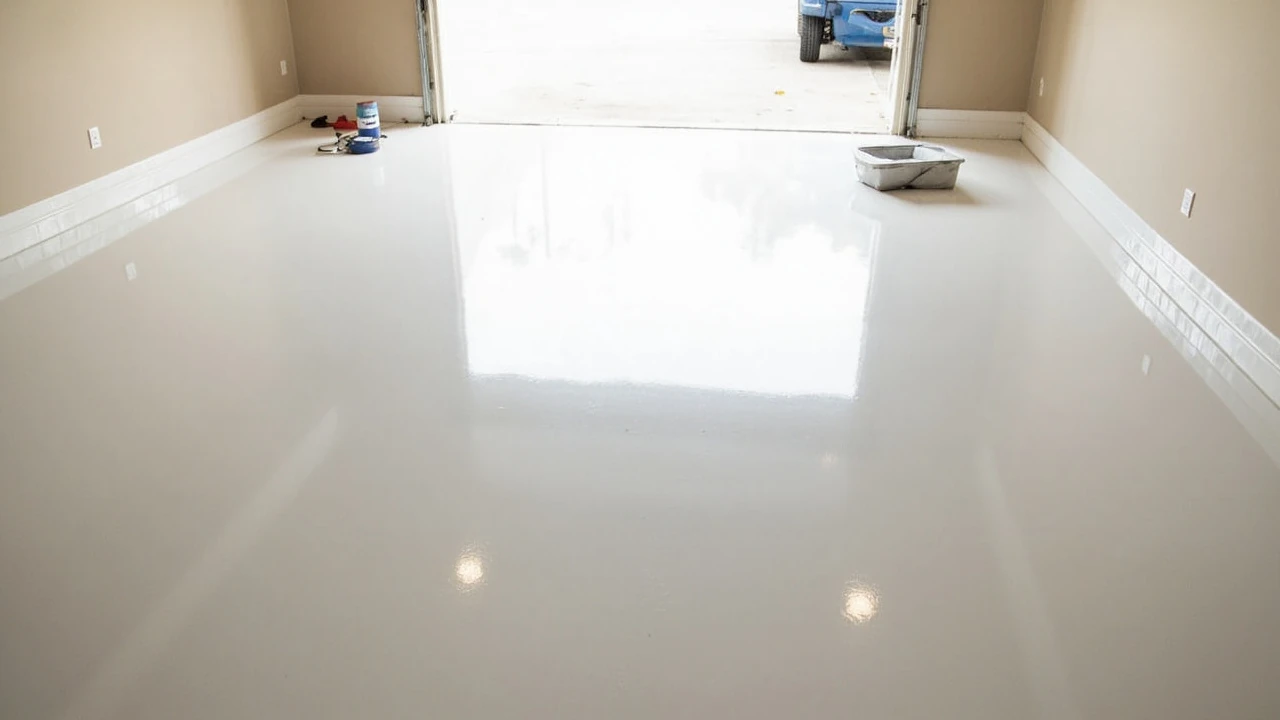
Epoxy flooring
A homeowner in Ohio spent two weekends scraping peeling latex paint off her garage slab before the contractor pointed at the dark oil stains and said the words no one wants to hear: the concrete has to be ground, not just cleaned. That single decision, surface preparation, is the quiet reason most epoxy flooring projects either look great for a decade or fail within a year. If you are weighing a new garage floor, a basement refresh, or a commercial buildout, the gap between a satisfying result and a costly do-over usually comes down to understanding what the system really is and where it earns its reputation.
Epoxy flooring is a resin-based surface that is poured or troweled directly onto prepared concrete, where it cures into a hard, seamless, and chemically bonded layer. It is not a paint, not a wax, and not a peel-and-stick covering. Once cured, it becomes part of the floor itself, which is why a properly installed system can outlast several rounds of carpet or vinyl in a busy space. The same feature that makes it durable also makes it unforgiving of shortcuts.
What epoxy flooring actually is
Epoxy is a two-part thermosetting resin. A clear or pigmented base is mixed with a hardener, and a chemical reaction turns the liquid into a rigid, plastic-like surface that bonds tightly to concrete. The term “epoxy flooring” usually refers to the whole system rather than a single coat: a primer, the epoxy body coat, optional color flakes or quartz, and a clear topcoat for UV protection and abrasion resistance.
This is different from epoxy coatings, which is the term used for thin, paint-like products sold in DIY kits at home centers. Those products contain some epoxy resin but are typically a fraction of the thickness of a true industrial system, and they behave more like a tough paint than a structural floor. The performance gap is large.
Key properties of a cured epoxy floor
- Seamless surface with no grout lines for dirt or bacteria to hide in.
- Chemical resistance to oils, fuels, acids, and many solvents, which is why factories, labs, and auto shops use it.
- Abrasion and impact resistance that holds up under forklifts, rolling tool chests, and dropped wrenches.
- Bonded adhesion to properly prepared concrete, with pull-off strengths that often exceed the concrete’s own tensile strength.
- Decorative flexibility in color, flake blends, metallic pigments, and logos.
According to Stonhard’s epoxy flooring overview, industrial and commercial systems are typically built for chemical resistance, abrasion resistance, slip resistance, and seamless hygienic protection, with options for static control, recycled glass aggregates, and decorative finishes for lobbies, showrooms, and public spaces.
Where epoxy flooring makes sense
The best use cases share three traits: a concrete substrate, a hard-use environment, and a desire for a cleanable surface. Epoxy is a strong fit in many of the spaces Home Revive Group’s readers tend to be upgrading.
Residential use cases
- Garages for cars, workshops, and home gyms.
- Basements converted to rec rooms, home offices, or laundry areas.
- Utility rooms around water heaters, HVAC equipment, and washers.
- Porches and patios in covered, protected locations with UV-stable topcoats.
Commercial and light-industrial use cases
- Auto dealerships and repair shops that need chemical and stain resistance.
- Warehouses and production floors with forklift and pallet traffic.
- Healthcare, veterinary, and pharmaceutical spaces that need hygienic, seam-free floors.
- Retail and showrooms that want a custom color or branded logo embedded in the floor.
- Data centers and labs that need static-dissipative or conductive formulations.
For homeowners, the most common reason to choose epoxy over polished concrete, tile, or sealed concrete is the combination of durability and a clean, modern look with very little ongoing maintenance.
The main types of epoxy flooring systems
Not all “epoxy floors” are the same. The label covers a family of systems that differ in thickness, installation method, and intended use. The right choice depends on the condition of the slab, the traffic it will see, and the look you want.
| System | Typical thickness | Best for | Key trade-offs |
|---|---|---|---|
| Roller-applied epoxy coating | 3–10 mils (thin) | Light residential garages, basements | Lower cost, easier DIY, but shorter service life and prone to hot-tire pickup |
| Self-leveling epoxy | 1/16″ to 3/16″ | Warehouses, showrooms, smooth residential finishes | Smooth, attractive, hides minor slab flaws; limited texture for slip resistance |
| Epoxy mortar (troweled) | 1/4″ or more | Heavy industrial, repair of damaged slabs | Highest impact resistance, very thick, rougher surface |
| Broadcast flake or quartz | 1/16″ to 1/4″ with broadcast media | Garages, schools, commercial kitchens | Excellent slip resistance and visual texture; more steps to install |
| Metallic or decorative epoxy | Self-leveling with pigment | Showrooms, lobbies, feature floors | High visual impact, higher skill required, more sensitive to installer error |
| Static-dissipative / conductive | Varies | Electronics assembly, data centers, flammable storage | Specialized grounding requirements, higher cost |
Choosing between them is less about price alone and more about matching the system to the conditions it will face. A decorative metallic floor in a busy forklift aisle will look bad within a year; a thin DIY coating in a restaurant kitchen will not survive the cleaning regimen.
How epoxy flooring is installed
The install is where most projects succeed or fail, and the sequence is largely the same across systems. Skipping or rushing any of these steps is the single biggest predictor of a floor that peels, bubbles, or turns cloudy.
- Inspection and moisture testing. The slab is checked for cracks, coatings, and moisture vapor. Calcium chloride or relative humidity tests tell the installer whether the slab is dry enough to accept epoxy or needs a moisture-tolerant primer.
- Surface preparation. Diamond grinding or shot blasting opens the pores of the concrete so the epoxy can mechanically bond. Acid etching is sometimes used for DIY kits but is generally less reliable than mechanical prep, especially on previously sealed or oily slabs.
- Repairs. Cracks, spalls, and control joints are filled with epoxy mortar or a flexible joint filler so they do not telegraph through the new floor.
- Primer. A thin primer penetrates the concrete, seals it, and creates a reliable bond for the body coat.
- Body coat. The pigmented epoxy is poured, squeegeed, or troweled to the specified thickness. Decorative flake or quartz is broadcast into the wet resin if specified.
- Topcoat. A clear urethane or polyaspartic topcoat adds UV stability, scratch resistance, and the final sheen. In a broadcast system, the topcoat also locks in the aggregate.
Cure times matter. A floor may feel dry to the touch in 12 to 24 hours, but most systems need several days before they are ready for vehicle traffic and a full week or more before heavy use. Walking on a tacky coat or parking a hot tire on a half-cured surface is the classic cause of marks, imprints, and peeling.
What epoxy flooring costs
Pricing varies widely by region, slab condition, system type, and square footage, but the broad ranges below are a realistic starting point. They reflect professionally installed work in the United States, not DIY kits.
| System type | Typical installed cost per sq ft | What drives the price |
|---|---|---|
| DIY epoxy coating kit | $1–$3 (materials only) | Kit price, prep tools, limited thickness and durability |
| Roller-applied professional coating | $3–$7 | Surface prep, one or two coats, basic topcoat |
| Decorative flake or quartz broadcast | $5–$12 | Media cost, multi-coat install, slip-resistant topcoat |
| Self-leveling or metallic | $8–$15+ | Skill required, material volume, design complexity |
| Industrial mortar or specialty systems | $12–$25+ | Thickness, chemical-resistant or static-control formulations |
A standard two-car garage of about 400 square feet is often the easiest way to compare quotes. Most professional residential garage jobs land somewhere between the decorative flake and self-leveling rows, with the total influenced heavily by how much repair the slab needs before the epoxy goes down.
Durability, lifespan, and maintenance
A professionally installed epoxy floor in a residential garage typically lasts 10 to 20 years before it needs a refresh, and commercial systems can run 15 to 25 years with periodic re-topcoats. The shorter end of those ranges almost always traces back to three things: poor surface prep, moisture in the slab, or chemical exposure the system was not designed for.
What shortens the life of an epoxy floor
- Hot-tire pickup, where summer tires soften a poorly cured or under-thickness coating and lift it off the slab.
- Moisture vapor pushing up through an unsealed slab, which causes bubbles or peeling.
- Dragging sharp metal across the surface without a work mat.
- Using harsh solvents that attack the topcoat, especially in unventilated shops.
- Skipping the topcoat and exposing the colored epoxy to UV, which yellows and chalks over time.
Routine care that keeps it looking new
- Sweep or dust-mop weekly to keep grit from acting like sandpaper.
- Mop with a neutral pH cleaner; avoid acidic descalers unless the manufacturer approves them.
- Wipe up oil, brake fluid, and battery acid promptly.
- Use felt pads or rubber mats under heavy shop equipment and motorcycle kickstands.
- Reapply a sacrificial wax or wear-layer topcoat every couple of years in busy garages.
Compared with sealed concrete, tile, or vinyl, an epoxy floor is competitive on upkeep because there are no grout lines to scrub and no waxing schedule the way VCT has. The trade-off is that damage, when it happens, is harder to hide and usually means re-coating a section rather than spot-cleaning.
Epoxy flooring vs other popular floor types
If you are choosing between systems, the comparison that matters is the one that fits your space. The table below uses common alternatives for the same concrete slab.
| Floor type | Durability | Moisture tolerance | Comfort underfoot | Maintenance | Typical look |
|---|---|---|---|---|---|
| Epoxy flooring | High | Depends on prep; needs moisture control | Hard, cold; can be softened with mats | Low; seamless and easy to clean | Glossy, custom color, flake, or metallic |
| Polished concrete | High | Good; breathable | Hard, cold | Low; occasional re-polish | Industrial gray, mottled |
| Sealed concrete | Moderate | Good | Hard, cold | Moderate; reseal every few years | Matte to satin, natural gray |
| Porcelain or ceramic tile | High | Excellent | Hard, cold; warmer with radiant heat | Moderate; grout needs attention | Any color or pattern |
| Luxury vinyl plank or tile | Moderate | Good with proper underlayment | Warmer and softer | Low; seams can trap water | Wood or stone look |
| Rubber flooring | Moderate | Excellent | Soft, warm | Low; seams need sealing in wet areas | Utility mat look |
The honest answer is that no single floor wins in every category. Epoxy’s strengths are durability, chemical resistance, and a seamless finish. Its weaknesses are comfort and the fact that installation quality varies a lot between contractors.
Pros and cons at a glance
- Pros: long service life, seamless and hygienic, resistant to oil and chemicals, highly customizable, lower lifetime maintenance than many floors.
- Cons: hard and cold underfoot, long cure time after install, sensitive to moisture if the slab is not tested, hard to refinish in sections, and a poor DIY result is very hard to undo.
Common mistakes to avoid
Most epoxy flooring failures are not mysterious. They are the predictable result of one of a handful of well-known mistakes.
- Coating over a dirty or oily slab. Even a thin oil film will prevent the epoxy from bonding.
- Skipping the moisture test. A slab that looks dry can still be pushing vapor, which lifts the coating in bubbles.
- Using a DIY kit where a thick system is needed. A two-car garage with two daily drivers is not the same use case as a craft room.
- Ignoring the topcoat. Without UV protection, colored epoxies yellow outdoors or in sunlit rooms.
- Not planning for a second day. Most professional systems need a return trip for the topcoat or second layer.
Before you sign a contract, it is reasonable to ask the installer which prep equipment they use, whether they moisture-test, what brand and thickness of system they are quoting, and how long the floor needs to cure before you can drive on it. The answers tell you almost everything about the result you are about to get.
How to pick the right installer
Epoxy flooring is one of the categories where the difference between a great and a poor outcome is the crew doing the work, not the brand on the bucket. A few habits separate the pros from the rest.
- They will visit the site, look at the slab, and ask how you use the space before quoting.
- They will explain moisture testing, surface preparation, and the specific system in plain language.
- They will give you a written scope that lists the brand, the number of coats, the broadcast media, and the topcoat.
- They will give you realistic cure times and put them in writing.
- They will have a portfolio of local work and references you can call.
Be cautious of quotes that are dramatically lower than the others, vague language like “epoxy floor” without a brand or system, or installers who want to skip moisture testing on a below-grade slab. A bargain price is usually a sign that one of the prep steps is being left out.
Is epoxy flooring a DIY project?
It can be, in the right circumstances. A solid, above-grade, lightly used basement floor is a reasonable candidate for a careful homeowner with a weekend to spare, a diamond cup grinder for prep, and patience for two thin coats plus a topcoat. A garage that sees two cars, road salt, and a riding mower in summer is not. In that environment, a professional system will usually outlast a DIY kit several times over, and the cost difference is smaller than people expect when repairs and re-coats are factored in.
Whichever path you take, the prep is the same. No kit, no matter how expensive, will save a floor that is laid over an unprepared slab.
Frequently asked questions
How long does epoxy flooring last?
A professionally installed residential system typically lasts 10 to 20 years, and a commercial system can last 15 to 25 years with periodic re-topcoats. The lifespan depends most heavily on surface preparation, slab moisture, and the type of traffic the floor sees.
Can epoxy flooring be applied over old concrete?
Yes, in most cases, as long as the slab is structurally sound, free of loose material, and properly prepared. The concrete must be ground or shot-blasted to open the pores, and any cracks or spalls should be repaired with epoxy mortar before the new system goes down. Old coatings, sealers, or curing compounds may need to be removed first.
Is epoxy flooring slippery?
Smooth, high-gloss epoxy can be slippery when wet, especially with water or oil on the surface. The risk is reduced significantly by adding a broadcast media such as aluminum oxide, decorative flake, or quartz, and by using a textured topcoat. Most residential garage systems are designed with enough texture to walk on safely with wet shoes.
How long does an epoxy floor need to cure?
Most systems are walkable in 12 to 24 hours and ready for light use in 48 to 72 hours. Vehicle traffic is usually safe after about 5 to 7 days, and full chemical resistance develops over 7 to 14 days. Hot-tire exposure should be avoided during this window to prevent marks and pickup.
Can epoxy flooring be used outdoors?
Standard epoxy yellows and chalks under UV exposure, so outdoor installations require a UV-stable topcoat, often a polyurethane or polyaspartic. Even with the right topcoat, exterior slabs face more expansion and contraction from temperature swings, which can stress the bond. For most patios and driveways, other systems are a better fit than interior-grade epoxy.
What is the difference between epoxy flooring and epoxy coating?
An epoxy coating is a thin, paint-like product usually sold in DIY kits and applied with a roller, often 3 to 10 mils thick. Epoxy flooring refers to a thicker, multi-coat system installed by a professional, typically 1/16 inch or more, often with broadcast media and a protective topcoat. Coatings are less durable and more prone to hot-tire pickup than full flooring systems.
Does epoxy flooring add value to a home?
It can, especially in garages and finished basements where buyers notice clean, well-finished floors. A new epoxy floor is not a return-on-investment project in the same way a kitchen renovation is, but it tends to shorten time on market and reduce buyer concerns about concrete damage and moisture.
What should I do before the installer arrives?
Clear the space completely, including items on the walls if the floor runs to the edges, and make sure the area is dry. Discuss any pets, HVAC, or scheduling constraints in advance so the crew can plan around them. Plan to keep vehicles off the floor for the full cure window the installer specifies.
Leave a Reply